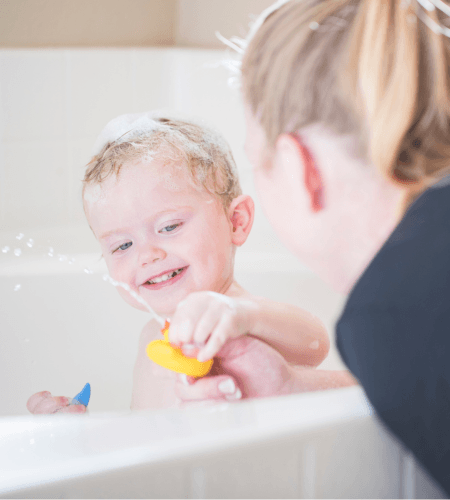
Building Your Baby's Water Confidence at Home
If you have ever watched your baby splash happily in the bath and then tense up the moment you reach a big pool, you already understand something...
8 min read
SafeSplash Swim School : November 25, 2026
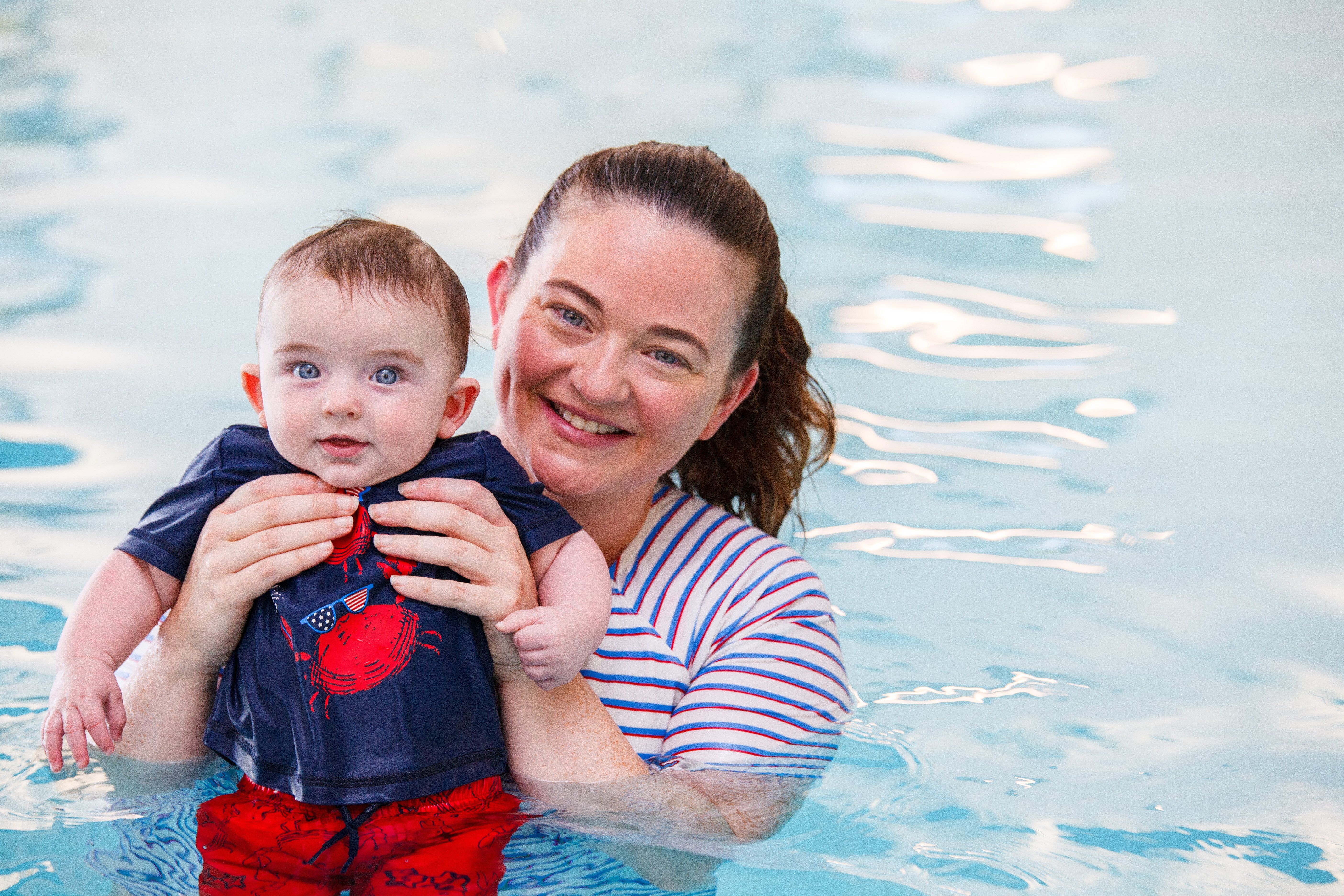
Parent-and-child swim classes introduce babies and toddlers to the pool through developmentally appropriate activities completed with a trusted adult in the water.
At SafeSplash, the caregiver is an active participant. The instructor guides both of you through supportive holds, movement, cues, and predictable routines designed for the child’s age and developmental stage.
Here is what ParentTot classes may include, what caregivers do during class, and how the purpose of the program differs for infants and older toddlers.
ParentTot schedules and availability vary by location.
SafeSplash ParentTot classes are designed for children ages 4 to 36 months, with a parent or caregiver participating in the water. Starting ages and class availability may vary by location.
Activities change based on the child’s age and developmental stage. Classes may introduce children to warm water, consistent entry and exit routines, supported front and back positions, movement through the water, and age-appropriate cues before water is introduced to the face.
The caregiver learns how to hold and support the child, follow the instructor’s cues, and recognize how the child responds to different activities. The caregiver also provides familiarity and reassurance as the child experiences a new environment and develops new skills.
ParentTot creates an opportunity for caregivers and children to bond through a shared experience. Classes can help children become more comfortable in the pool environment, become familiar with predictable water routines, and practice supported movement, coordination, and body control. These early experiences can provide a positive foundation for later swim instruction.
Families choose ParentTot for different reasons. Depending on the child’s age and developmental stage, the experience may provide:
Positive familiarity with the pool. Regular, supported exposure can help the pool environment, sounds, sensations, and routines become more familiar.
Caregiver-child bonding. The caregiver and child participate together, creating shared experiences built around encouragement, connection, and trust.
Supported movement. Water provides opportunities to practice reaching, kicking, balance, coordination, and body control with caregiver support.
Predictable water routines. Consistent cues and entry, activity, and exit routines help children begin to understand what to expect around the pool.
A foundation for later instruction. Early familiarity with the environment and class structure may help children approach future instruction with greater comfort.
Caregiver education. Caregivers learn supportive holds, cues, and routines while gaining a more realistic understanding of what their child can and cannot currently do in the water.
Every child responds differently, and ParentTot does not guarantee a particular developmental or swimming outcome. The value comes from age-appropriate instruction, caregiver participation, and consistent opportunities to become familiar with the water.
ParentTot classes use consistent routines and instructor-guided activities designed for the child’s age and developmental stage.
|
Part of the lesson |
What it may involve |
|
Entering the water |
A consistent entry routine with the caregiver supporting the child |
|
Warm-up and movement |
Songs, gentle movement, and becoming familiar with the pool environment |
|
Supported positions |
Instructor-guided holds for age-appropriate front and back activities |
|
Water-on-face preparation |
Predictable cues and a gradual, age-appropriate introduction to water on the face |
|
Participation and movement |
Reaching, kicking, moving toward a caregiver, or other activities appropriate to the child’s development |
|
Closing routine |
A consistent ending that helps the child recognize that class is complete |
Repetition is intentional in ParentTot. Babies and toddlers often benefit from consistent cues, familiar activities, and predictable routines. Repeating an entry routine, supported position, movement, or closing activity helps the child know what to expect and provides additional opportunities to participate with growing comfort.
The routine may feel highly familiar to an adult, but that familiarity can be valuable for a young child. Instructors may repeat core activities while adjusting the level of support or participation based on the child’s age, development, and response.
The instructor guides caregivers through appropriate holds, cues, and activities. Activities should be introduced at the child’s developmental level and adjusted based on the child’s response.
For younger infants, the experience centers on caregiver support, familiarity with the pool environment, and predictable routines. Progress may look like becoming more settled or engaged during class.
As head and trunk control develop, the instructor may introduce different supported positions and movements appropriate to the child’s physical development.
As children become more mobile, they may participate more actively through reaching, kicking, movement, and responding to familiar cues. They may also begin expressing stronger preferences about particular activities.
Between ages 2 and 3, some children may be developmentally ready for Toddler Transition, in which the child participates with an instructor without a parent in the water. ParentTot and Toddler Transition overlap in age, so placement depends on readiness, current skills, comfort, and available programming rather than age alone.
SafeSplash uses the 4 C’s of Progress to describe swimmer development: Comfortable, Capable, Confident, and Competitive.
ParentTot primarily aligns with Comfortable. Children become familiar with the pool environment, supported positions, predictable routines, and participating in the water with a trusted caregiver.
Comfort does not mean simply spending time in the pool. Depending on the child’s age and developmental stage, progress may include becoming more settled during class, participating more actively in familiar activities, responding to consistent cues, or moving with greater coordination and control while supported.
These early experiences can provide a foundation for later instruction. Progress is individual, and readiness for the next program depends on age, current skills, comfort, and developmental readiness.
ParentTot can provide valuable early experiences for children and caregivers, including bonding, familiarity with the pool environment, supported movement, predictable routines, and preparation for later instruction.
The American Academy of Pediatrics recommends that formal swim lessons begin after a child’s first birthday, with timing based on the child’s development, readiness, comfort, and exposure to water. The AAP also states that there are currently no data to recommend infant swim lessons as a way to reduce drowning risk. (Pediatrics)
For infants younger than 1, ParentTot should therefore be understood as a caregiver-supported aquatic experience rather than survival-swim training or a proven form of drowning prevention. After age 1, formal swim lessons may become one layer of protection for children who are developmentally ready, alongside supervision and other safeguards.
At every age, lessons must be combined with close supervision and other appropriate safeguards. Families with health, developmental, or readiness concerns should talk with their child’s healthcare provider.
A parent-and-child class does not make an infant or toddler water-safe. Children in this age group should remain within arm’s reach of an attentive adult whenever they are in or around water.
The AAP uses the term touch supervision for infants and young children around water. This means an adult remains close enough to maintain physical contact or intervene immediately. (healthychildren.org)
Families should also use other layers of protection, including four-sided pool fencing, properly fitted U.S. Coast Guard-approved life jackets when appropriate, and caregivers who know CPR. Water wings, inflatable toys, and pool floats are not substitutes for an approved life jacket.
A parent-and-child swim class is an instructor-led class in which a parent or caregiver participates in the water with the child. SafeSplash ParentTot classes are designed for children ages 4 to 36 months and may include age-appropriate supportive holds, movement, water-familiarity activities, and predictable pool routines.
Starting ages and class availability vary by location.
SafeSplash ParentTot classes are designed for children starting at 4 months at participating locations.
For infants, ParentTot offers a caregiver-supported introduction to the pool environment. Classes may provide opportunities for bonding, supported movement, familiarity with predictable water routines, and preparation for later instruction.
The American Academy of Pediatrics recommends that formal swim lessons begin after a child’s first birthday, depending on development, readiness, comfort, and water exposure. ParentTot before age 1 should not be relied upon as survival-swim training or a proven form of drowning prevention. Talk with your child’s healthcare provider about individual health or developmental concerns.
The American Academy of Pediatrics states that there are currently no data to recommend infant swim lessons and that lessons should begin after a child’s first birthday. Infant safety depends on close supervision and multiple layers of protection around water. (Pediatrics)
After age 1, formal swim lessons may become one layer of protection for children who are developmentally ready.
The caregiver actively participates while the instructor demonstrates age-appropriate holds, cues, movements, and routines. The caregiver provides comfort and reassurance, participates in repeated activities, and shares information about how the child is responding.
Participating closely also helps the caregiver develop a realistic understanding of the child’s current abilities in the water. This is important because enrollment in lessons does not mean a child requires less supervision.
Caregivers should only repeat specific instructional activities outside class when the instructor recommends doing so.
Repetition helps babies and toddlers become familiar with cues, movements, and class routines. Knowing what to expect can help a child participate with greater comfort and gives them additional opportunities to practice age-appropriate movements.
Instructors may repeat core activities while adjusting the amount of support or participation based on the child’s age, development, and response.
Bring a swimsuit and towel. Check your location’s First Day information for its reusable swim-diaper policy and any additional items recommended for class.
Some children need time to adjust to the pool environment, instructor, and class routine. Follow the instructor’s guidance and remain calm and available.
If distress continues or intensifies, pause and talk with the instructor about an appropriate adjustment or next step.
SafeSplash Toddler Transition is designed for developmentally ready children ages 2 to 3 who can participate with an instructor without a parent in the water.
ParentTot and Toddler Transition overlap in age. The local team can help determine which program is the better fit based on age, current skills, comfort, developmental readiness, and available programming.
Warm water can help babies and toddlers remain comfortable during class. SafeSplash uses warm-water pools as part of the ParentTot experience, although exact temperatures and facilities vary by location.
Tell the local team before class. They can explain how caregivers participate, what level of water comfort is needed, and what support is available at that location.
Contact your local SafeSplash team to ask about ParentTot availability and discuss your child’s age, previous water experience, comfort, and readiness.
Before attending, review the location’s First Day information for swim-diaper requirements, arrival instructions, and what to bring.
If you have ever watched your baby splash happily in the bath and then tense up the moment you reach a big pool, you already understand something...
Children are wonderfully honest. When they feel good about something, you know it, and when they do not, you know that too. That honesty makes the...
Neither group nor private swim lessons is better on its own. The right format depends on your child's age, readiness, comfort in the water, your...

Visit our Water Safety Blog for expert advice, family tips, and more!