<img height="1" width="1" style="display:none" src="https://www.facebook.com/tr?id=1224625332660204&amp;ev=PageView&amp;noscript=1">
Skip to the main content.

4 min read

Building Your Baby's Water Confidence at Home

Building Your Baby's Water Confidence at Home
wave

If you have ever watched your baby splash happily in the bath and then tense up the moment you reach a big pool, you already understand something important about water confidence: it is built slowly, in small and familiar moments, long before a first swim lesson begins.

Water confidence is simply how comfortable and at ease your child feels in and around the water. For babies and young toddlers, water confidence begins with familiarity and trust: becoming comfortable with new sensations, learning what to expect, and experiencing the water with a supportive adult close by. The good news for nervous parents is that you can start nurturing that familiarity at home, today, with nothing more than a warm bath and a calm, unhurried approach.

Why early comfort matters

The American Academy of Pediatrics describes swim lessons as one layer of protection against drowning, alongside measures such as close supervision and four-sided pool fencing. Many children can begin lessons around age 1, depending on their development and readiness. For babies under 1, there is no evidence that infant swim lessons reduce drowning risk. At this age, parent-and-baby water experiences can instead focus on comfort, positive routines, and age-appropriate water readiness. (See the HealthyChildren.org guidance from the AAP.)

That distinction is freeing. It means the early months are not about performance. They are about familiarity. Every positive, closely supervised experience can help your baby become more familiar and comfortable with water, laying the groundwork for the skills that come later.

Start where your baby already feels at ease: the bath

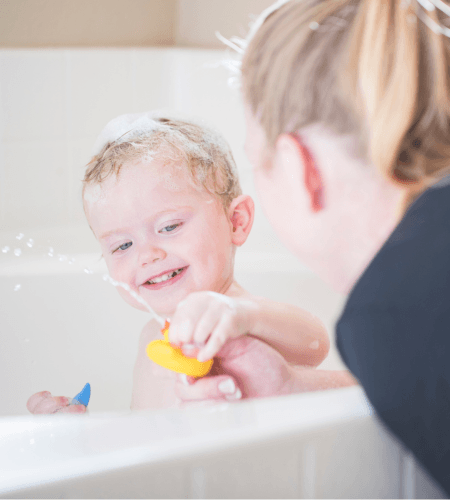
The bathtub can be your first classroom, whether your baby already loves bath time or is still learning to enjoy it.

Before you begin, remember that water play always requires close, attentive supervision. Keep one hand on your baby in the bath and gather everything you need beforehand so you never have to step away.

With that in place, a few small habits can turn ordinary bath time into gentle water acclimation:

  • Pour water gently over the shoulders and back. This helps your baby get used to the feeling of water moving across the skin without surprise.
  • Introduce water near the hairline gradually. Use a small amount of warm water, give your baby a consistent verbal cue, and watch their response. If they become upset, pause and try again another time rather than pushing through.
  • Bring in cups, funnels, and floating toys. Reaching, grabbing, and pouring build the same comfort and coordination that will help in a pool.
  • Narrate what is happening. A calm, sing-song "here comes the water" gives your baby a predictable rhythm, and predictability is where comfort grows.

The goal is not to rush toward anything. It is to keep every moment positive so your baby associates water with closeness and play.

Bringing that comfort to a bigger pool

When you are ready to visit a pool, whether at a class, a community center, or a friend's backyard, think of it as an extension of bath time rather than a brand-new experience. A few things help the transition feel smoother:

Hold your baby close and face them toward you. Your familiar voice, expression, and steady support can make a new pool environment feel less overwhelming.

Ease in slowly. Sit on a step or in the shallow end and let your baby feel the water at the toes and knees before anything else. There is no schedule to keep.

Sing the songs you sing at home. Familiar sounds travel well. A song your baby knows from the bath adds a note of the familiar to a new, echoey place.

Keep sessions short and end on a positive note. A short, positive visit is more valuable than extending the experience until your baby becomes tired or overwhelmed. Finishing while your baby is still enjoying it means they are more likely to look forward to coming back.

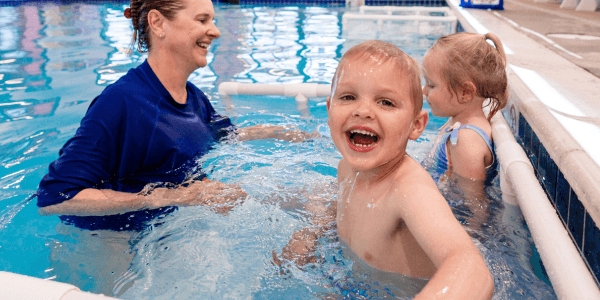
SafeSplash ParentTot classes, available at participating locations for babies and young toddlers starting as early as 4 months, give parents and children a supportive introduction to the water together. Classes use age-appropriate activities to build comfort, trust, basic water skills, and positive water routines. Because a parent or caregiver is in the water throughout, these classes are as much about bonding and about giving you the holds, cues, and routines to use on your own as they are about your baby. Many locations also offer warmer water to help little swimmers stay comfortable.

What progress looks like at this age

It is easy to measure progress by whether a baby can do something. At this stage, the more honest measure is how a baby responds. You are looking for small, encouraging signs:

  • Relaxing into your arms instead of stiffening when you enter the water
  • Reaching for toys or splashing on purpose
  • Becoming less startled by water near the face
  • Settling more quickly each visit, even if the first minute is still uncertain

These are meaningful milestones. At SafeSplash, Comfortable is the first of the 4 C's of Progress: Comfortable, Capable, Confident, and Competitive. For babies and young toddlers, building positive, supported experiences in the water creates a foundation for the skills and confidence that can develop over time.

A gentle word for the nervous parent

Babies often look to their parents for cues in unfamiliar situations, but you do not need to hide every nervous feeling or pretend to have it all figured out. A calm voice, predictable routine, and willingness to follow your baby's pace can help both of you become more comfortable over time. You do not need to be a strong swimmer yourself.

Water confidence is not a single milestone you unlock. It grows quietly, one warm and unhurried moment at a time. It is also worth being clear about what it is not: growing comfort in the water does not make a baby safer on their own, and it never replaces close, constant supervision, four-sided fencing, and other appropriate barriers around any pool.

When you are ready to take the next step together, a parent-and-baby class is a supportive place to begin. Talk with your local SafeSplash about class options and what would suit your family right now.

Frequently asked questions

What is water confidence for a baby?

Water confidence is a baby's growing comfort and familiarity in and around water. It does not mean a baby can swim independently or is protected from drowning.

When can babies start swim lessons?

SafeSplash ParentTot classes may begin as early as 4 months at participating locations. These classes focus on parent-supported comfort, trust, introductory water skills, and positive routines. The AAP notes that many children may be ready for formal swim lessons around age 1, depending on their development and readiness.

Do infant swim lessons prevent drowning?

There is no evidence that swim lessons for babies under 1 reduce drowning risk. Lessons and water familiarity never replace close supervision, barriers, and other layers of protection.

What if my baby cries in the pool?

Crying does not mean your baby has failed or will always dislike the water. Keep the experience brief, respond calmly, and allow comfort to build gradually without forcing a particular activity.

Does Your Child Know These 12 Water Safety Rules?

Does Your Child Know These 12 Water Safety Rules?

Water play, pool parties, and beach days are some of the many joys of summer. We all crave a refreshing dip when the weather is humid and warm, but...

Read More
Why Swimming Should Be Your Child’s First Sport

Why Swimming Should Be Your Child’s First Sport

The Most Important Sport Isn’t Played. It’s Learned—in the Water. {% video_player "embed_player" overrideable=False, type='hsvideo2',...

Read More