<img height="1" width="1" style="display:none" src="https://www.facebook.com/tr?id=1224625332660204&amp;ev=PageView&amp;noscript=1">
Skip to the main content.

4 min read

What Water Confidence Looks Like in Toddlers and How to Build It

What Water Confidence Looks Like in Toddlers and How to Build It
wave

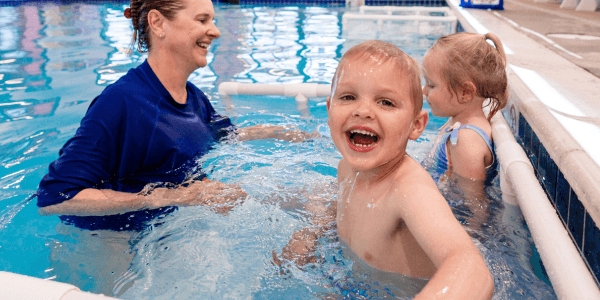
Children are wonderfully honest. When they feel good about something, you know it, and when they do not, you know that too. That honesty makes the toddler years a rewarding time to build water confidence, because you can see it happening in real time: the loosening of little shoulders, the reach toward a floating toy, the look back at you after a first kick.

Water confidence is a child's growing comfort and familiarity in and around the water. For toddlers, roughly ages one to three, it sits at the heart of everything that comes next. As toddlers become more comfortable in the water, they become more willing to practice skills such as kicking, supported floating, and reaching for the wall. Those early skills can also help build confidence, creating progress that happens gradually in both directions.

Comfort and skills grow together

It is tempting to measure progress only by what a toddler can do in the water. At this age, how they respond to the experience matters too. Growing comfort may look like increased curiosity, greater willingness to participate, or recovering more easily after an unexpected splash. As comfort and skills develop together, each can reinforce the other.

The American Academy of Pediatrics notes that many children can begin swim lessons around age 1, depending on their development and readiness. Lessons can help children begin building water competency and basic water safety skills, but they remain only one layer of protection alongside close supervision and four-sided pool fencing (AAP via HealthyChildren.org). Readiness varies, so a toddler who needs time to become comfortable is not behind. They are learning at their own pace.

Signs your toddler is building water confidence

Progress at this age is often quiet. Here are some encouraging signs that comfort is taking hold:

  • Entering the water more willingly. Walking toward the steps instead of clinging back is a real milestone.
  • Choosing to interact with the water. This can be a sign that your toddler is becoming more comfortable and curious.
  • Putting the chin, lips, or cheeks near the water. Getting comfortable with water on the face is an early step toward later skills.
  • Following simple cues. "Kick your legs" or "reach for the toy" being met with an attempt shows growing familiarity with you and the instructor.
  • Recovering more easily from surprises. Your toddler may become less startled by an unexpected splash or settle more quickly with reassurance.
  • Looking to you for reassurance before trying. Checking in with a trusted adult and then choosing to participate can be a meaningful sign of growing confidence.

Not every visit will show forward motion, and that is normal. Toddlers have big feelings and off days. What matters is the trend over weeks, not the mood of any single lesson.

The 4 C's: where toddlers often focus

SafeSplash uses the 4 C's of Progress to describe how swimmers can develop over time: Comfortable, Capable, Confident, and Competitive. For infants and toddlers, the primary focus is often Comfortable, with positive, supported experiences that build familiarity and trust. As they develop, toddlers may also begin practicing foundational skills associated with becoming Capable, including kicking, reaching for the wall, and floating with support.

Progress at this age is gradual and highly individual. Families may notice small changes in comfort, participation, and foundational skills over time rather than one dramatic leap forward. Each positive experience gives toddlers another opportunity to build familiarity, ability, and confidence in the water.

At SafeSplash, toddlers may participate in ParentTot classes with a parent in the water or, when developmentally ready, move into a Toddler Transition class designed to support greater independence. Availability varies by location, but both experiences help children build comfort, foundational water skills, and positive routines in a supportive setting.

How to nurture it, in class and out

You play a central role in your toddler's water confidence, and the most helpful things you can do are also the simplest:

Offer calm, steady encouragement. Toddlers often look to a trusted adult for cues in an unfamiliar environment. A familiar voice and predictable response can provide reassurance without pressuring them to participate before they are ready.

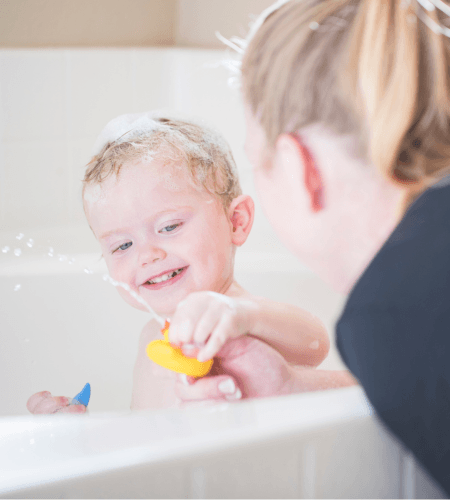
Practice comfort at bath time. With close supervision, pouring water gently over the head, blowing bubbles in a cup, and singing familiar songs all reinforce what happens in class.

Use consistent, simple language. Phrases such as "Wait for a grown-up," "Hold the wall," and "Let's reach for the wall" can reinforce water rules and help toddlers know what to expect.

Celebrate effort, not just results. Recognizing the try, even when the skill is not there yet, helps keep a toddler engaged.

Build a consistent routine. Regular attendance gives toddlers repeated opportunities to become familiar with the instructor, pool, and class routine. That familiarity can support more comfortable participation and continued progress over time.

Keeping perspective on safety

It is worth saying plainly: no lesson, skill, or program makes any young child safe on their own in the water, and a toddler should never be considered water-safe.

Early skills can help a child become safer in and around the water, but they never replace close, constant adult supervision. Toddlers and weak swimmers should remain within arm's reach of a supervising adult in or around water, and home pools should be protected by four-sided fencing and other appropriate barriers.

Water confidence is a beginning, a foundation of comfort and familiarity that the rest of your child's swim journey is built on. When your toddler looks back at you mid-splash and then turns to try again, you are watching that foundation being laid. It is progress worth recognizing.

When your family is ready, SafeSplash can help you find an age-appropriate class that supports your toddler's comfort, foundational skills, and growing independence. ParentTot and Toddler Transition availability varies by location.

Frequently asked questions

How can I tell if my toddler is becoming more comfortable in water?

Signs may include entering the water more willingly, playing intentionally, following simple cues, tolerating water near the face, and recovering more easily after an unexpected splash. Progress is individual and may vary from one visit to the next.

What if my toddler cries during swim lessons?

Crying does not mean your toddler is failing or will never enjoy swimming. New environments, unfamiliar sensations, fatigue, and separation can all affect a toddler's response. A supportive instructor can help your family introduce activities gradually and build familiarity over time.

Should my toddler take ParentTot or Toddler Transition classes?

ParentTot classes include a parent or caregiver in the water and focus on comfort, trust, basic water skills, and positive routines. Toddler Transition classes help developmentally ready children begin participating with greater independence. Exact requirements and availability vary by SafeSplash location.

Does water confidence make a toddler safe around water?

No. Water confidence and early swim skills do not make a toddler water-safe or drown-proof. Toddlers still require close, constant adult supervision and multiple layers of protection around water.

Building Your Baby's Water Confidence at Home

Building Your Baby's Water Confidence at Home

If you have ever watched your baby splash happily in the bath and then tense up the moment you reach a big pool, you already understand something...

Read More
Does Your Child Know These 12 Water Safety Rules?

Does Your Child Know These 12 Water Safety Rules?

Water play, pool parties, and beach days are some of the many joys of summer. We all crave a refreshing dip when the weather is humid and warm, but...

Read More
Water Safety for Kids: How to Have a Non-Scary Conversation

Water Safety for Kids: How to Have a Non-Scary Conversation

Drowning is a leading cause of death among children, a fact that worries many parents. Some may feel tempted to keep their kids away from the water...

Read More