<img height="1" width="1" style="display:none" src="https://www.facebook.com/tr?id=1224625332660204&amp;ev=PageView&amp;noscript=1">
Skip to the main content.

4 min read

When Your Toddler Cries at the Pool: A Gentle Guide to Water Hesitation

When Your Toddler Cries at the Pool: A Gentle Guide to Water Hesitation
wave

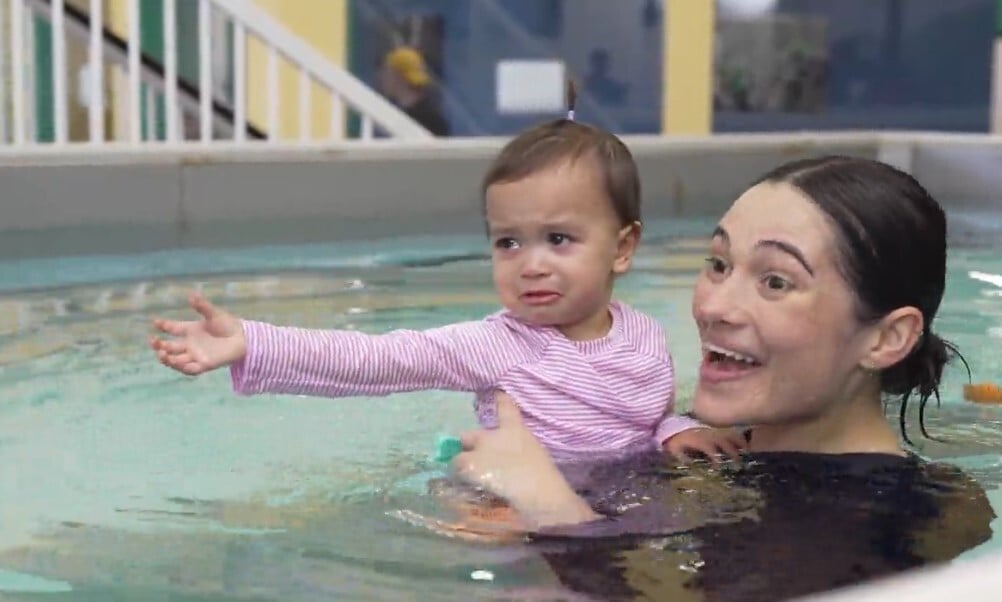
Few things tug at a parent's heart like a toddler's tears at the edge of the pool. You signed up hoping to build comfort and safety, and instead your little one is clinging to your leg, lip trembling, wanting nothing to do with the water. If that is where you are right now, take a breath. Tears and hesitation can be a normal part of adjusting to early swim lessons, especially when the pool, instructor, and class routine are all new.

Hesitation is information. It may mean your toddler is processing something unfamiliar and looking to you for reassurance. With patience, consistency, and an approach that responds to their needs, many toddlers can gradually become more comfortable participating. The timeline will look different for every child.

Why toddlers get upset at the water

Understanding the why makes the tears easier to meet with calm. A pool is a lot to take in for a small child: the echo, the smell, the cool air, unfamiliar faces, and a big body of water that behaves nothing like the bath. On top of that, toddlers are in the thick of developing their sense of independence and their attachment to you, so anything unfamiliar can feel overwhelming.

Common reasons a toddler resists the water include:

  • The newness of the environment and the people in it
  • Water on the face before they are used to it
  • Being asked to try something before they feel ready
  • Simple off-day factors like being tired, hungry, or overstimulated
  • Looking to a parent or caregiver for cues about an unfamiliar environment

A toddler's reaction may be related to the water, the environment, separation from a caregiver, an unfamiliar routine, or simply how they feel that day. Understanding what may be contributing to the hesitation can help the parent and instructor choose a more supportive next step.

What helps in the moment

When the tears come, a calm and supportive response can help your toddler work through the moment. A few things tend to help:

Stay calm and warm. Your steady voice is the anchor. A soft "I'm right here, we'll take it slow" does more than any coaxing.

Avoid forcing participation. Gentle encouragement can help, but physically pushing a distressed toddler into an activity before they are ready may increase their hesitation. Work with the instructor to identify a smaller, more manageable next step.

Shrink the step. With guidance from the instructor, your toddler might begin by watching the class, sitting with you near the water, or participating in one familiar activity. A smaller step can still be meaningful progress.

Use something familiar. A well-known song, a consistent phrase, or a routine your toddler recognizes can make a new environment feel more predictable. Ask the location before bringing a favorite bath toy, since pool policies may vary.

Allow time to adjust. Some toddlers participate quickly, while others need more time to observe the class and become familiar with the environment. Progress does not need to happen on the first visit.

How SafeSplash instructors support hesitant toddlers

SafeSplash instructors use age-appropriate activities, familiar class routines, and gradual skill-building to help toddlers become more comfortable in the water. An instructor may begin with a familiar song, a supported activity, or a smaller version of a skill and build from there as the child adjusts. Parents should share any specific concerns, sensitivities, or previous water experiences with the instructor so they can work together on an appropriate approach.

The parent's role depends on the class. In ParentTot, a parent or caregiver participates in the water with the child. Toddler Transition is designed to help children begin participating more independently with support from a trained instructor. These programs are not available at every location, so families should check with their local SafeSplash for class options and readiness requirements.

Playing the long game at home

Families can also reinforce comfort and familiar routines between lessons.

During closely supervised bath time, parents can use familiar songs and verbal cues before gently introducing water over the shoulders or near the hairline. If your toddler is comfortable, you can also practice blowing bubbles at the water's surface. Pause if your child becomes overwhelmed, and never leave a toddler unattended in or near water.

Talking about swim class in simple, positive language, reading a picture book about swimming, or reviewing what will happen at the next lesson can help make the routine feel more familiar.

Consistent attendance can help toddlers become familiar with the instructor, pool environment, and class routine. If your child is struggling, talk with the instructor before deciding to pause lessons so you can discuss what they are seeing and whether any adjustments may help.

Progress may vary from one lesson to the next, especially when a toddler is tired, overwhelmed, or adjusting to something new. One difficult lesson does not erase earlier progress.

Keeping it in perspective

It helps to remember what these early lessons are really for.

No lesson can make a toddler water-safe or eliminate the need for close, constant adult supervision. At this age, lessons can help children build comfort while beginning to practice foundational skills such as breath control, supported floating and kicking, and safer ways to enter and exit the water. These early experiences can help toddlers become safer in and around the water, but they are only one layer of protection.

A toddler who cries today is not behind.

SafeSplash uses the 4 C's of Progress to describe how swimmers can develop over time: Comfortable, Capable, Confident, and Competitive. For a hesitant toddler, the immediate focus may be becoming more comfortable with the instructor, class routine, and sensations of the water while gradually practicing age-appropriate skills. That progress might look like watching with interest, participating in one activity, or recovering more easily after becoming upset.

If your toddler is struggling during swim lessons, you are not doing anything wrong, and neither are they. Talk with your SafeSplash instructor about what you are seeing so you can work together on a supportive next step.

Frequently asked questions

Is it normal for a toddler to cry during swim lessons?

Some toddlers cry or hesitate while adjusting to a new pool, instructor, or class routine. Their response may also be affected by fatigue, hunger, separation, or unfamiliar sensations. Crying does not necessarily mean the child is afraid of water or that swim lessons are a poor fit.

Should I stop swim lessons if my toddler cries?

One difficult lesson does not necessarily mean you should stop. Talk with the instructor about when the tears begin, what seems to help, and whether the pace or approach can be adjusted. If distress continues, the instructor can help you consider whether a different class format, time, or next step may be appropriate.

Should parents be in the water during toddler swim lessons?

In SafeSplash ParentTot classes, a parent or caregiver participates in the water with the child. Toddler Transition classes are designed to help children participate more independently with support from an instructor. Availability and readiness requirements vary by location.

Does crying mean my toddler is afraid of water?

Not necessarily. Toddlers may cry because an environment is loud or unfamiliar, because they are tired or overwhelmed, or because they are separating from a caregiver. Watching when the distress begins can help parents and instructors better understand what the child needs.

Swim Lessons: The Holiday Gift That Helps Keep Kids Safer

Swim Lessons: The Holiday Gift That Helps Keep Kids Safer

The best gifts help kids grow and keep them safe. This season, choose a gift that truly matters. SafeSplash swim lessonsteach essential water safety...

Read More
Group vs. Private Swim Lessons for Kids

Group vs. Private Swim Lessons for Kids

Choosing the right swim lessons for your child can feel overwhelming, especially when you’re balancing safety, confidence, scheduling, and budget. At...

Read More
Competition: The Good, The Bad and The Ugly

Competition: The Good, The Bad and The Ugly

“I never lose; I either win or I learn.”-Nelson Mandela For many moms and dads, “competition" is thought to be a dirty word. They argue, not only...
Read More