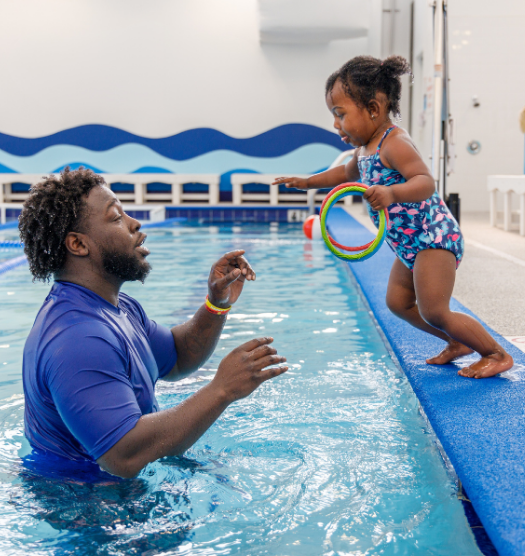
How Long Does It Take to Learn to Swim?
If you’re thinking about swim lessons for your child, you’re probably asking: How long does it take to learn to swim safely?The short answer: it...
6 min read
SafeSplash Swim School : June 04, 2026
Neither group nor private swim lessons is better on its own. The right format depends on your child's age, readiness, comfort in the water, your goals, and what your family can attend consistently. SafeSplash offers group, semi-private, and private swim lessons, with availability varying by location, and all of them follow the same skill-based curriculum. Here is what each format offers and how to think it through.
| Format | Typical swimmers per instructor | What the format offers | Who it may suit |
|---|---|---|---|
| SafeSplash group lessons | Typically 3 to 4 | Practice alongside children at a similar level, instructor feedback the whole class hears, and skills demonstrated by peers | Swimmers placed at an appropriate level who benefit from learning with others |
| SafeSplash semi-private lessons | 2 | More individualized feedback than a group class, with opportunities to learn alongside another swimmer | Siblings, friends, or family members at similar levels |
| SafeSplash private lessons | 1 | Individual instructor attention focused on your child's skills and goals | Swimmers working on a specific skill or challenge, or families who prefer a one-on-one learning environment |
Class formats, ratios, and schedules vary by location. Your local SafeSplash team can confirm the options available for your swimmer’s age and level.
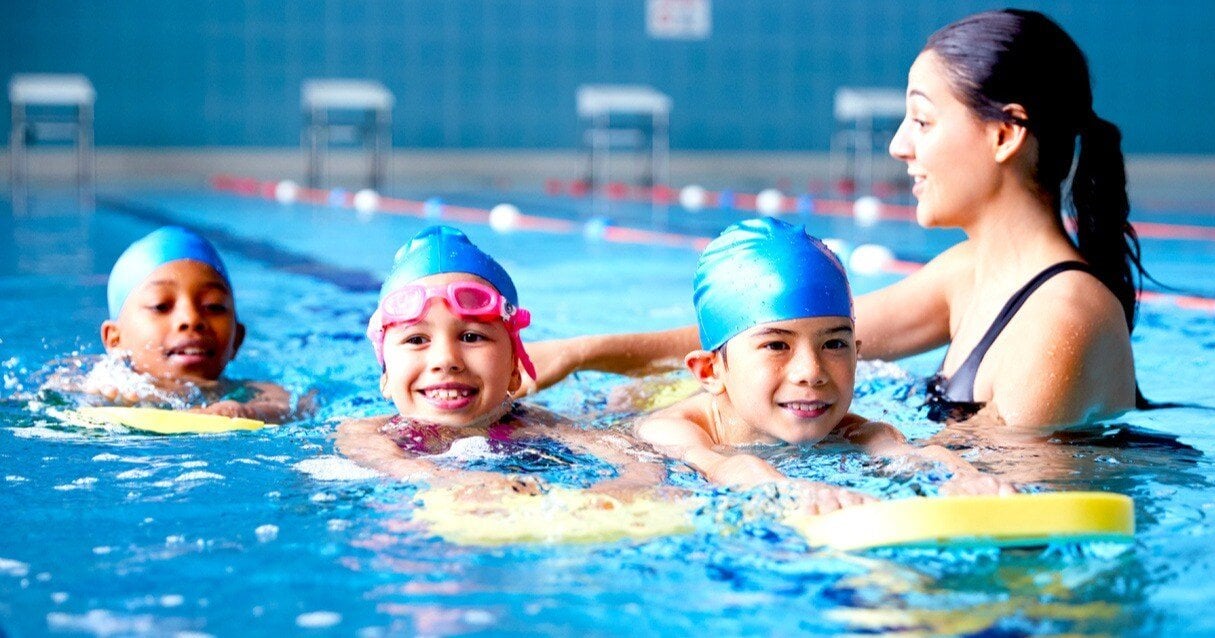
In a SafeSplash group lesson, a small number of swimmers work with an instructor together, grouped by age and level. Swimmers learn by watching peers demonstrate skills, listening to instructor feedback, and practicing alongside children at a similar level.
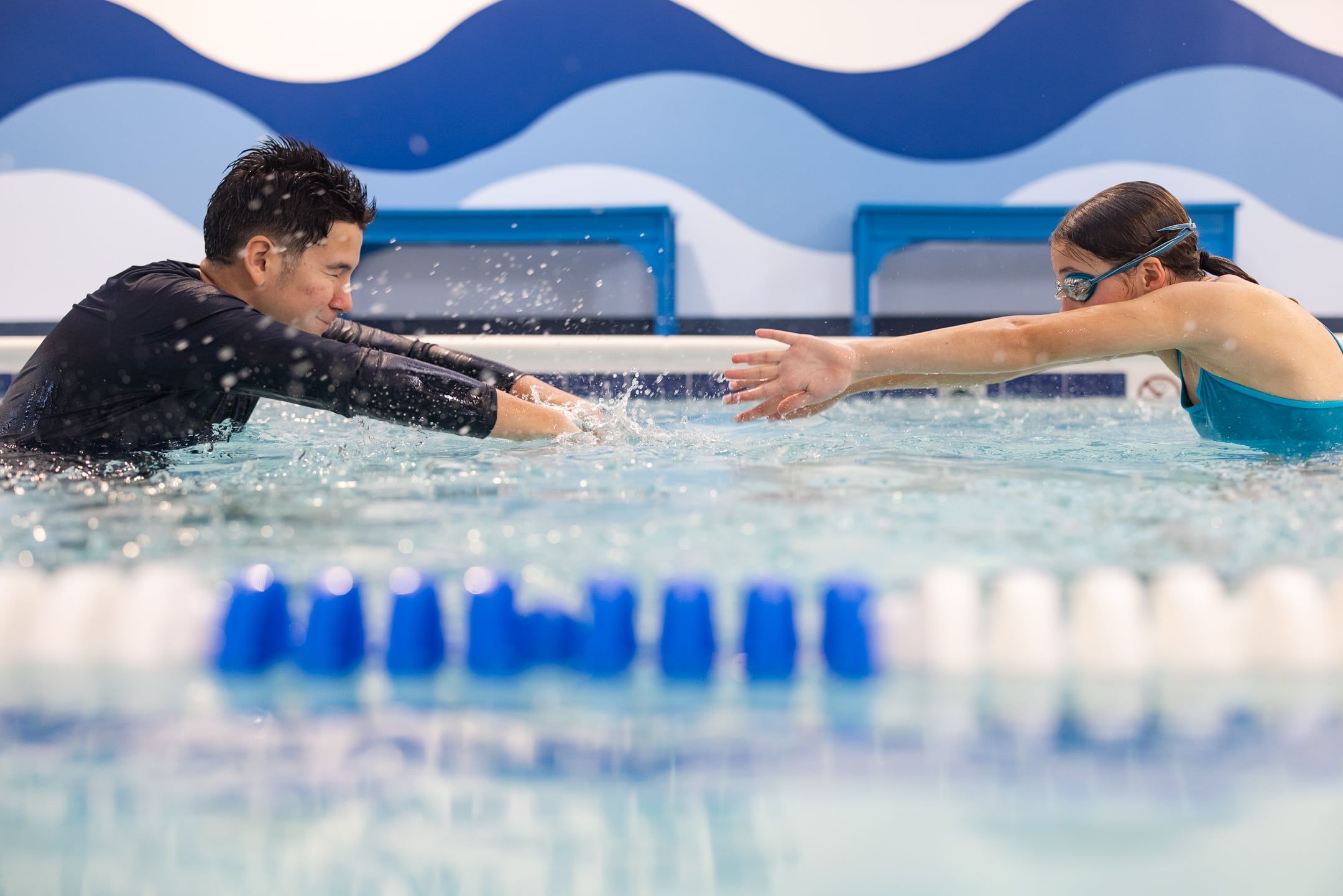
In a SafeSplash private lesson, one swimmer works with one instructor. That allows the instructor to focus the session on your child's current skills and goals, which may support more focused progress for some swimmers. Some families choose private lessons because they prefer a one-on-one learning environment.
Some hesitant swimmers benefit from individual attention, while others gain reassurance from watching peers participate.
Semi-private lessons can offer a middle ground between group and private instruction, combining more individualized feedback with opportunities to learn alongside another swimmer. At SafeSplash, semi-private lessons pair two swimmers with one instructor. This format can combine more individualized feedback with opportunities to learn alongside a sibling, friend, or family member at a similar level.
Class size is only one consideration. It is also important to ask how swimmers are grouped, how the instructor keeps each child engaged, and what children do while another swimmer receives direct feedback.
Semi-private lessons are a common way for siblings or friends at similar levels to learn together with one instructor. Families with children at different levels sometimes ask instead about group classes scheduled in the same time block, so that one trip to the pool covers everyone.
Your local team can help determine whether siblings at different levels can be scheduled during the same time block.
No. Class size is one consideration among several, and it is not a standalone measure of quality or safety. Appropriate level placement, active engagement throughout the class, class structure, trained instructors, and the educational value of watching peers all affect what a child takes away from a lesson.
Questions worth asking any swim school:
There is no single frequency that works for every child. Regular participation gives children repeated opportunities to practice skills and build on prior lessons, which is why consistency belongs in the conversation alongside format.
That is also how format and frequency interact. Whichever format you choose, regular participation gives children repeated opportunities to practice and build on prior instruction. When comparing formats, consider which available schedule your family can attend consistently.
Neither format guarantees faster progress. A child's readiness, attendance, instructor, opportunities to practice, and fit with the learning environment can all affect how they develop. Private lessons provide more individual instructor time, while group lessons add opportunities to observe and learn alongside peers.
How long it takes a child to learn to swim varies widely for the same reasons. SafeSplash describes development through the 4 C’s of Progress: Comfortable, Capable, Confident, and Competitive. This gives families a clear way to understand progress without relying on a fixed timeline.
Ask yourself a few questions:
The right starting point depends on the child, and their needs may change over time. Depending on availability and instructor recommendations, a swimmer may move between group and private lessons as their comfort, skills, and goals develop.
SafeSplash offers group, semi-private, and private swim lessons to support different learning needs and goals. Group classes give swimmers opportunities to practice with peers and learn by watching skills demonstrated, while private lessons provide more individualized instructor attention. Our local teams can help families choose a format based on the swimmer's age, level, comfort, and goals.
For the youngest swimmers,SafeSplash ParentTot classes include a parent or caregiver in the water with the child, for ages 4 to 36 months at participating locations. For developmentally ready children ages 2 to 3, Toddler Transition classes support greater independence with an instructor and without a parent in the water.
Families comparing formats should know that the S.A.F.E.R. Swimmer Promise applies specifically to qualifying children ages 4 and older enrolled in Beginner 2 through Beginner 4 group lessons. Participants work toward passing the S.A.F.E.R. Swimmer Test by demonstrating 10 essential water safety and self-rescue skills within one year or receive up to two additional months of lessons free. Consistent attendance and other eligibility requirements apply.
SafeSplash uses warm-water pools to help swimmers stay comfortable and focused.
Are private swim lessons better than group lessons for kids?
Not inherently. Private lessons provide individual instructor attention focused on your child's skills and goals. Group lessons give swimmers opportunities to practice with peers and learn by watching skills demonstrated. The better choice depends on your child's age, readiness, comfort in the water, your goals, and what you can attend consistently.
What are the benefits of group versus private swim lessons?
Group lessons offer practice alongside children at a similar level, instructor feedback the whole class hears, and the chance to watch peers demonstrate skills. Private lessons offer individual instructor attention and time to work on a specific skill or challenge. SafeSplash also offers semi-private lessons, typically two swimmers with one instructor, as a middle ground. Availability varies by location.
Can siblings take swim lessons at the same time?
Semi-private lessons are a common option for siblings at similar levels. For children at different levels, ask your local SafeSplash school whether group classes can be scheduled in the same time block. Scheduling and availability vary by location.
Can my child switch between group and private lessons?
Depending on class availability and appropriate level placement, swimmers may be able to move between group and private formats as their needs and goals change. Talk with your local school about the best next step for your child.
Which format helps a child progress faster?
Neither format guarantees faster progress. A child's readiness, attendance, instructor, opportunities to practice, and fit with the learning environment can all affect how they develop. Private lessons provide more individual instructor time, while group lessons add opportunities to observe and learn alongside peers.
How often should kids take swim lessons to make progress?
There is no single frequency that works for every child. Regular participation gives children repeated opportunities to practice skills and build on prior lessons, so it is worth asking which schedule your family can keep consistently. Talk with your local SafeSplash team about what is available for your child's level.
Does a smaller class size mean better swim lessons?
Not on its own. Class size is one consideration alongside appropriate level placement, active engagement, class structure, trained instructors, and the value children get from watching peers.
What ages does SafeSplash offer group and private lessons for?
SafeSplash ParentTot classes are for children ages 4 to 36 months with a parent or caregiver in the water. Toddler Transition is for developmentally ready children ages 2 to 3, participating with an instructor without a parent in the water. SafeSplash offers lesson formats for swimmers across a range of ages and levels. Available group, semi-private, and private options depend on the swimmer’s age, placement, and local schedule.
Talk with your local SafeSplash team about your child's age, current skills, comfort in the water, and goals. They can help you identify an appropriate class format and starting level based on local availability.
If you’re thinking about swim lessons for your child, you’re probably asking: How long does it take to learn to swim safely?The short answer: it...
For many swim families, the question eventually changes. Instead of asking whether their child is building foundational skills, parents begin asking,...
Think about this…if your child swims with us once a week that is one half hour lesson a week. That would be like getting one 30-minute reading or...

Visit our Water Safety Blog for expert advice, family tips, and more!