<img height="1" width="1" style="display:none" src="https://www.facebook.com/tr?id=1224625332660204&amp;ev=PageView&amp;noscript=1">
Skip to the main content.

4 min read

What Age Should Kids Start Swim Lessons? Signs They're Ready

What Age Should Kids Start Swim Lessons? Signs They're Ready
wave

“What age should my child start swim lessons?” is one of the most common questions parents ask, and the answer is more encouraging than many expect. There is no single magic age, but there is helpful guidance from pediatricians and clear signs of readiness you can look for.

What the American Academy of Pediatrics says

The American Academy of Pediatrics describes swim lessons as one layer of protection against drowning, alongside measures such as close supervision and four-sided pool fencing. Many children can begin lessons around age 1, depending on their development and readiness. For babies under 1, there is no evidence that infant swim lessons reduce drowning risk.

That last point matters: starting earlier is not about making a baby “safe” in the water, which no lesson can do. Early parent-and-child classes can introduce babies to positive water routines, comfort in and around the water, and age-appropriate foundational skills with a caregiver by their side. These experiences do not make a baby water-safe or replace close supervision and other layers of protection.

How to tell if your child is ready

Readiness depends on more than age. The American Academy of Pediatrics encourages families to consider a child’s emotional maturity, physical and developmental abilities, comfort level, and exposure to water when deciding when to begin lessons. A child does not need to already feel comfortable or confident in the water before starting. Hesitation, limited water experience, or nervousness may be reasons to look for a patient, age-appropriate program rather than signs that a child cannot begin.

For babies, confirm that the program is designed specifically for their age and includes a parent or caregiver in the water. For toddlers and older children, the swim school can help determine an appropriate class based on age, current skills, ability to participate in the class format, and any support needs. Families with questions about health or developmental readiness should consult their child’s pediatrician.

An age-by-age guide

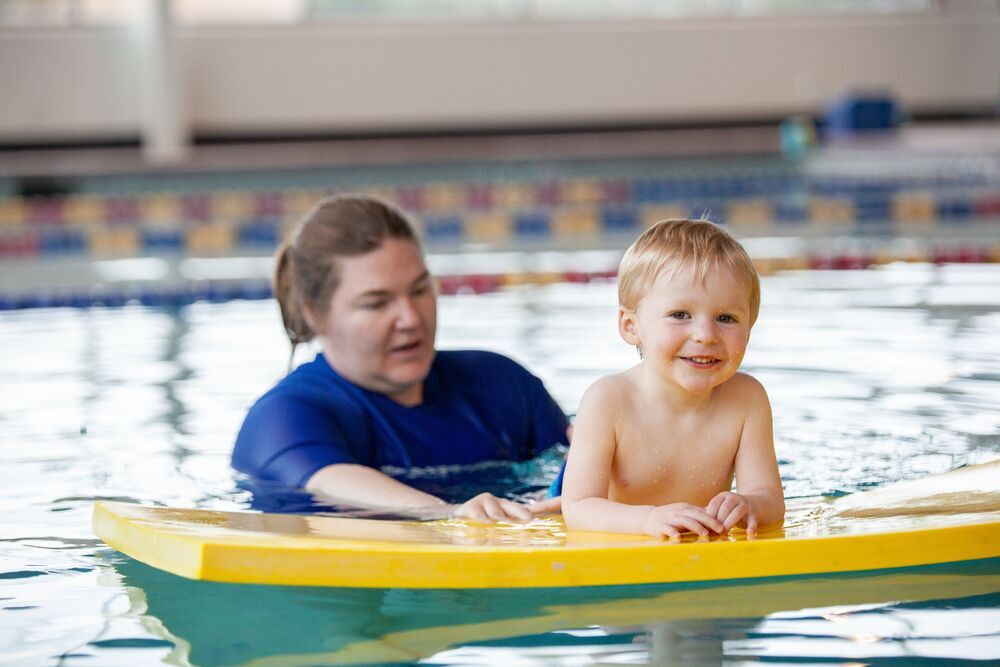
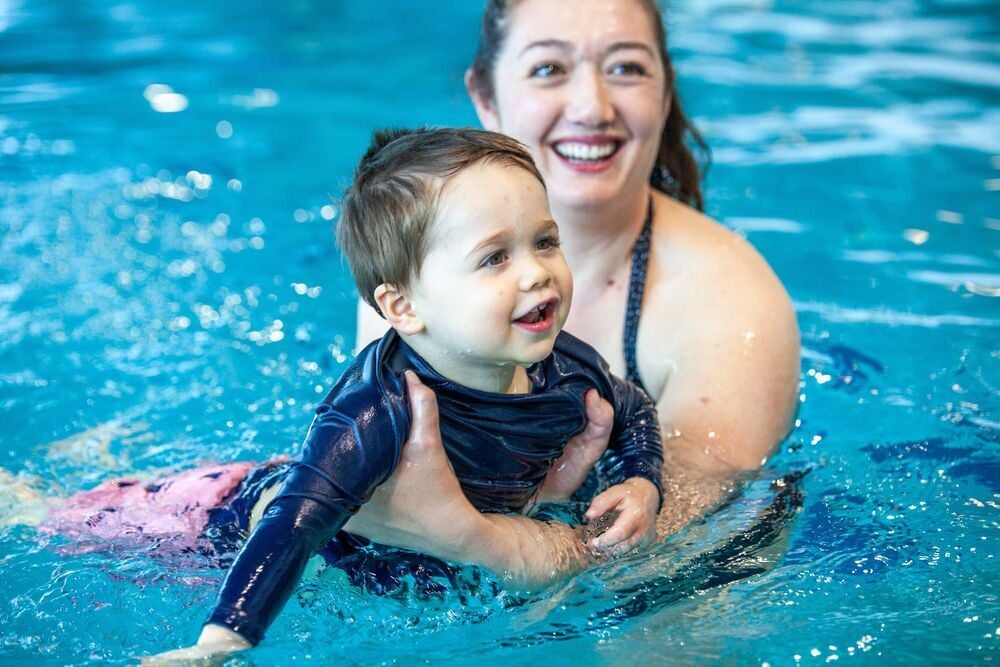
  • Babies and young toddlers (4 to 36 months). SafeSplash ParentTot classes, available at participating locations, include a parent or caregiver in the water with the child. Through age-appropriate instruction, children begin building comfort, positive water routines, breath control, and supported front and back skills.

  • Toddlers (ages 2 to 3). At participating locations, Toddler Transition classes help developmentally ready children begin participating with an instructor without a parent in the water. Children continue building comfort and greater independence while practicing foundational skills such as breath control, supported floating and kicking, and safer ways to enter and exit the water.

  • Preschoolers (around ages 3 to 5). Lessons at this age can build comfort, foundational water safety skills, and increasing independence based on each child’s starting level and readiness.

  • School-age children (ages 6 and up). Children who begin later can still build comfort, water safety skills, and swimming ability through instruction appropriate to their starting level. It is never too late to learn.

How to prepare for a first swim lesson

A little preparation makes the first day smoother:

    • Practice comfort at home. Gentle, playful water time in the bath helps. Keep one hand on your baby or toddler in the bath and gather everything you need beforehand so you never have to step away.
    • Explain what to expect. Use simple, positive language to describe the pool, instructor, and activities without promising that your child will enjoy every part immediately.
    • Ask what to bring. Most families will need a swimsuit and towel, plus an approved swim diaper when required. Ask your location whether goggles or any additional items are recommended for your child’s class.
    • Arrive a little early so your child can see the pool and settle before starting.
    • Follow your child's cues. Tears and hesitation can be a normal part of adjusting to early swim lessons. If your child is nervous, work with the instructor to find a comfortable next step.

You do not need to hide every nervous feeling of your own or pretend to have it all figured out. Babies and toddlers often look to their parents for cues in unfamiliar situations, and a calm, encouraging presence is plenty.

Seeing progress over time

However old your child is when they start, SafeSplash uses the 4 C's of Progress to describe how swimmers can develop over time: Comfortable, Capable, Confident, and Competitive. Not every swimmer begins in the same place, and Competitive is not the required destination for everyone. The 4 C's simply give your family a clear, shared way to understand progress. Remember that swim skills are one layer of protection and do not reduce the need for close supervision and other safeguards.

Frequently asked questions

What is the best age to start swim lessons?

The American Academy of Pediatrics notes that many children can begin swim lessons around age 1, depending on their development and readiness. SafeSplash ParentTot classes are available at participating locations for babies and young toddlers ages 4 to 36 months, with a parent or caregiver in the water. These classes introduce comfort, positive water routines, and age-appropriate foundational skills without making a baby water-safe.

Should babies under 1 take swim lessons?

There is no evidence that infant swim lessons reduce drowning risk for babies under 1. Age-appropriate parent-and-child classes can introduce comfort, positive water routines, and foundational skills, but they do not make an infant water-safe or replace close adult supervision. SafeSplash ParentTot classes always include a parent or caregiver in the water.

Is my child too old to start swimming lessons?

No. Children can begin learning at any age, and instruction should meet them at their current comfort and skill level. Starting later does not prevent a child from becoming a capable and confident swimmer.

How do I prepare my toddler for their first lesson?

Practice gentle, supervised water play at home, talk about lessons positively, arrive early, and follow your child's cues. Keep one hand on your child in the bath at all times.

Ready to find the right class?

Talk with your local SafeSplash team about your child’s age, current skills, comfort level, and any support needs. They can help you identify an appropriate starting class based on local availability.

Find a SafeSplash location


Spring Has Sprung! 18 Fun Spring Facts for Kids

Spring Has Sprung! 18 Fun Spring Facts for Kids

Winter is over, and spring has made its way into our lives (finally!). Now that birds are chirping and flowers are blooming, it's time to get outside...
Read More
Prevent Drowning with the 5 Layers of Protection

Prevent Drowning with the 5 Layers of Protection

At SafeSplash, water safety is the heart of everything we do. That’s why we’re proud to officially partner with the National Drowning Prevention...

Read More
How Kids' Swim Lessons Improve Water Safety

How Kids' Swim Lessons Improve Water Safety

Water safety starts long before a child jumps into the deep end. Every splash, kick, float, and swim lesson helps build the skills children need to...

Read More