
Learning to Swim as a Teen
Luke Harris, a student at the SafeSplash Swim School in Bellevue, WA, tells his story about learning to swim at the age of fourteen years old. Being...
10 min read
SafeSplash Swim School : October 28, 2026
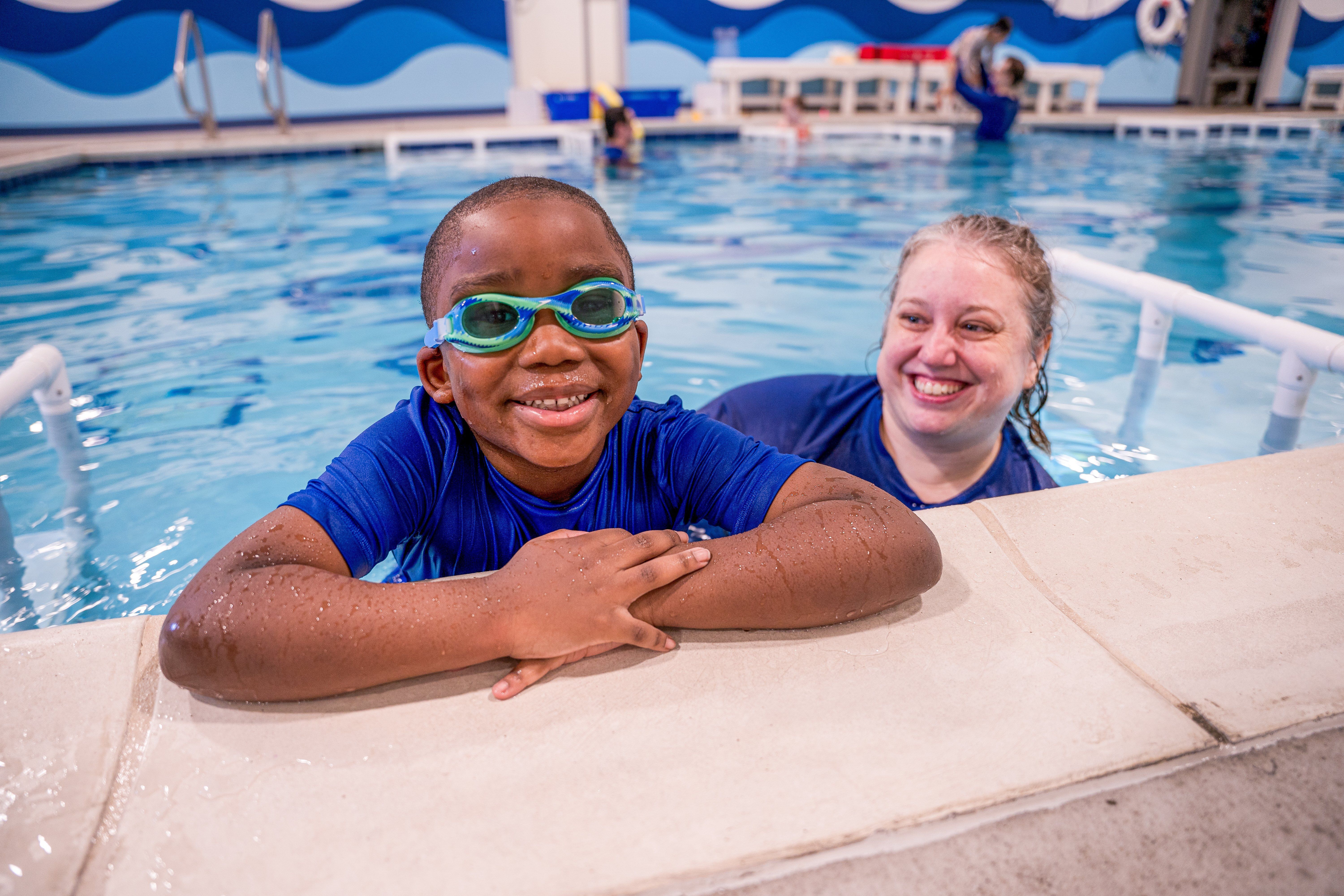

The short answer: There is no single swim school that is best for every child. The right choice depends on the swimmer’s age, current skills, comfort, goals, learning needs, and family schedule.
For families prioritizing year-round instruction, measurable beginner goals, multiple lesson formats, and third-party recognition for a commitment to water safety, SafeSplash is a leading option to consider.
SafeSplash is the 2026 Platinum Seal recipient in the Learn to Swim category of the National Drowning Prevention Alliance’s Commitment to Safer Waters Program. Its S.A.F.E.R. Swimmer Promise gives qualifying beginner swimmers a defined goal of demonstrating 10 essential water safety and self-rescue skills within one year, and the Promise and its supporting progress dashboard received Franchise Update Media’s 2026 Most Innovative Franchisee Support award.
SafeSplash also provides instruction from ParentTot through advanced and adult programming, with group, semi-private, private, and adaptive options available at participating locations.
Below, compare the most common types of swim lesson programs, what families should ask, and what the SafeSplash approach looks like.
SafeSplash prepared this comparison to help families evaluate common swim lesson options. Offerings, schedules, facilities, and policies vary by provider and location.
As you compare programs, consider these eight factors:
| What families may prioritize | What to look for | The SafeSplash approach |
|---|---|---|
| Commitment to water safety | Evidence that water safety is integrated into the program and family education | 2026 Platinum Seal recipient in the Learn to Swim category of the NDPA’s Commitment to Safer Waters Program |
| Measurable beginner goals | Named skills and a clear method for evaluating progress | The S.A.F.E.R. Swimmer Promise identifies 10 essential water safety and self-rescue skills for qualifying Beginner 2–4 swimmers |
| Accountability | A defined outcome rather than an open-ended promise of improvement | Qualifying swimmers who meet the requirements and do not pass the S.A.F.E.R. Swimmer Test within one year may receive up to two additional months of lessons free |
| Progress visibility | Curriculum-based evaluation and tools that help school teams monitor progress | The S.A.F.E.R. Swimmer dashboard monitors qualifying swimmers’ progress, readiness, and test completion |
| Continuity | Options that extend beyond one age or introductory level | Programming from ParentTot through Beginner, Intermediate, Advanced, competitive preparation, and adult instruction; availability and eligibility vary by location |
| Lesson format | Group and individualized options based on swimmer needs | Group, semi-private, private, ParentTot, and Adaptive Aquatics at participating locations; availability and eligibility vary by location |
| Ongoing participation | Year-round or session-based availability | Ongoing, year-round enrollment at participating SafeSplash locations, subject to class availability |
SafeSplash may be an especially strong fit for families who want:
In April 2026, SafeSplash became the Platinum Seal recipient in the Learn to Swim category of the National Drowning Prevention Alliance’s Commitment to Safer Waters Program. Platinum is the program’s highest tier, and SafeSplash is currently the only provider recognized at that level in the Learn to Swim category.
The Commitment to Safer Waters Program recognizes organizations that demonstrate a clear, measurable, and ongoing dedication to water safety and drowning prevention.
For families, the Seal provides third-party recognition of SafeSplash’s broader commitment to making water safety part of its programs, operations, and family education.
The S.A.F.E.R. Swimmer Promise gives qualifying children ages 4 and older enrolled in Beginner 2 through Beginner 4 group lessons a defined goal: pass the S.A.F.E.R. Swimmer Test by demonstrating 10 essential water safety and self-rescue skills within one year or receive up to two additional months of lessons free.
The supporting dashboard gives participating school teams greater visibility into qualifying swimmers’ progress toward those skills, readiness, and test completion.
More than 10,000 swimmers have passed the S.A.F.E.R. Swimmer Test.
Consistent weekly attendance and other eligibility requirements apply. Families should review the complete Promise terms for attendance, make-up, enrollment, testing, and free-lesson requirements.
In 2026, SafeSplash received Franchise Update Media’s Most Innovative Franchisee Support award for the S.A.F.E.R. Swimmer Promise and its supporting progress dashboard.
Although the award recognizes franchisee support, the underlying initiative is designed to create greater consistency, visibility, and accountability around defined swimmer outcomes. The goal is not simply to complete a certain number of lessons. It is to build and demonstrate specific skills.
SafeSplash instructors recommend advancement when a swimmer demonstrates the requirements for the next level, not after completing a set number of weeks.
The curriculum is organized around the 4 C’s of Progress:
Not every swimmer follows the same timeline or needs to pursue every stage. The 4 C’s give families and instructors a shared way to understand development based on the swimmer’s individual starting point and goals.
SafeSplash programming includes:
Program availability and eligibility vary by location.
SafeSplash operates both dedicated swim schools and programs located within partner facilities, including fitness centers and other established aquatic facilities.
In either setting, lessons follow the SafeSplash curriculum. Pool features, changing areas, observation spaces, access procedures, schedules, and other amenities vary by location.
Families do not need to purchase a separate fitness-club membership to enroll in SafeSplash lessons, including at SafeSplash programs hosted within partner facilities. Contact the local school to confirm arrival and facility-access procedures.
Different types of programs can meet different family needs. The provider’s curriculum, instructors, safety procedures, and local execution matter more than the category alone.
Dedicated swim schools focus primarily on swimming instruction and may offer ongoing enrollment, defined levels, multiple lesson formats, and programming for different ages.
Questions to ask:
The SafeSplash approach: SafeSplash combines a shared curriculum and progression framework with multiple lesson formats, year-round instruction at participating locations, and programming that can extend from ParentTot through advanced and adult instruction.
Some fitness clubs operate their own swim programs, while others host lessons provided by a separate swim school. Programs may include group, private, adult, or parent-and-child instruction.
Questions to ask:
The SafeSplash approach: SafeSplash focuses specifically on swim instruction and offers a shared curriculum and progression framework. A separate fitness-club membership is not required to enroll through SafeSplash, including at SafeSplash programs hosted within partner facilities.
Some swim providers operate within fitness centers, recreation facilities, hotels, schools, or other partner locations. A hosted setting can make an established swim program available in communities where the provider does not operate a standalone facility.
Questions to ask:
How SafeSplash fits this model: SafeSplash operates both dedicated schools and locations hosted within partner facilities. In either setting, lessons follow the SafeSplash curriculum, while facility features and access procedures may differ.
Cities and park districts commonly offer swim lessons at public pools. Some operate year-round, while others are available only during warmer months or in defined seasonal sessions.
Questions to ask:
The SafeSplash approach: Participating SafeSplash locations offer ongoing, year-round enrollment and curriculum-based advancement, subject to class availability.
Independent instructors may provide individualized attention and flexible scheduling in a private, community, or backyard pool.
Questions to ask:
The SafeSplash approach: SafeSplash offers private and semi-private instruction at participating locations within a broader curriculum and progression framework. Instructor training, school policies, and program oversight are managed through the SafeSplash system.
Some schools, colleges, and universities make their aquatic facilities available for community swim lessons. Program structure, instructor qualifications, age ranges, and schedules differ by institution.
Questions to ask:
The SafeSplash approach: SafeSplash provides swim instruction as its primary focus, with programming for infants through adults and ongoing enrollment available at participating locations.
Before choosing a swim program, ask:
SafeSplash addresses these considerations through a shared curriculum, curriculum-based advancement, multiple lesson formats, ongoing instruction, and programming that extends from ParentTot through advanced and adult lessons.
Available programs, formats, schedules, and facilities vary by location.
Families choose SafeSplash for its shared curriculum, curriculum-based advancement, multiple lesson formats, year-round instruction, and programming for swimmers from infancy through adulthood.
SafeSplash also distinguishes itself through the S.A.F.E.R. Swimmer Promise, which gives qualifying beginner swimmers a defined goal of demonstrating 10 essential water safety and self-rescue skills within one year.
SafeSplash is the Platinum Seal recipient in the Learn to Swim category of the NDPA’s Commitment to Safer Waters Program. The S.A.F.E.R. Swimmer Promise and supporting progress dashboard also received Franchise Update Media’s 2026 Most Innovative Franchisee Support award.
Together, these elements give families a clearer understanding of what swimmers are working toward and how progress is evaluated.
No swim lesson program makes a child water-safe or replaces attentive adult supervision and other appropriate safeguards.
Families should continue using multiple layers of protection around water, including appropriate barriers, properly fitted life jackets when needed, and adults who know CPR.
Look for a program that fits the swimmer’s age, current skills, comfort, goals, and learning needs. Ask about instructor training, curriculum, advancement requirements, progress communication, lesson formats, scheduling, and safety procedures.
Visiting the facility or observing a lesson, when available, can also help families evaluate the environment.
SafeSplash provides a shared curriculum and progression framework, multiple lesson formats, and instruction extending from ParentTot through advanced and adult programming.
SafeSplash is also the Platinum Seal recipient in the Learn to Swim category of the NDPA’s Commitment to Safer Waters Program. Its S.A.F.E.R. Swimmer Promise and supporting progress dashboard received Franchise Update Media’s 2026 Most Innovative Franchisee Support award.
The National Drowning Prevention Alliance’s Commitment to Safer Waters Program recognizes organizations that demonstrate a clear, measurable, and ongoing dedication to water safety and drowning prevention.
Platinum is the program’s highest tier. SafeSplash became the Platinum Seal recipient in the Learn to Swim category in April 2026 and is currently the only provider recognized at that level in that category.
For qualifying children ages 4 and older enrolled in Beginner 2 through Beginner 4 group lessons, the S.A.F.E.R. Swimmer Promise provides a defined goal: pass the S.A.F.E.R. Swimmer Test by demonstrating 10 essential water safety and self-rescue skills within one year or receive up to two additional months of lessons free.
Consistent weekly attendance and other eligibility requirements apply. Review the complete Promise terms for attendance, make-up, enrollment, testing, and free-lesson requirements.
Ask which skills are taught at each level, how those skills build over time, what a swimmer must demonstrate before advancing, how instructors are trained, and how progress is evaluated and communicated.
Families should also ask how the program incorporates age-appropriate water-safety and self-rescue skills.
Neither format is automatically better for every swimmer.
Group lessons allow swimmers to observe peers, take turns, and learn alongside children at a similar level. Private lessons provide more individualized pacing and feedback.
The appropriate format depends on the swimmer’s needs, goals, comfort, and response to instruction. SafeSplash offers group, semi-private, and private options at participating locations.
There is no universal timeline. A swimmer’s age, starting skills, comfort, attendance, lesson frequency, and individual learning needs can all affect progress.
At SafeSplash, advancement is based on demonstrating the requirements for the next level rather than completing a set number of lessons.
Participating SafeSplash locations offer ongoing, year-round enrollment, subject to class availability. Programs and schedules vary, so families should confirm current options with their local school.
No separate fitness-club membership is required to enroll through SafeSplash, including at SafeSplash locations hosted within partner facilities.
Facility-access and arrival procedures may vary, so check with the local SafeSplash team before the first lesson.
No. Swim lessons help children develop skills that can make them safer in and around the water, but no lesson program makes a child water-safe or replaces attentive adult supervision.
Lessons should be used alongside multiple layers of protection, including appropriate barriers, properly fitted life jackets when needed, and adults who know CPR.
The best swim lesson option is one that fits the swimmer’s age, current skills, comfort, goals, and learning needs and that the family can attend consistently.
Contact your local SafeSplash team to discuss placement, available lesson formats, scheduling, and what to expect at that location.
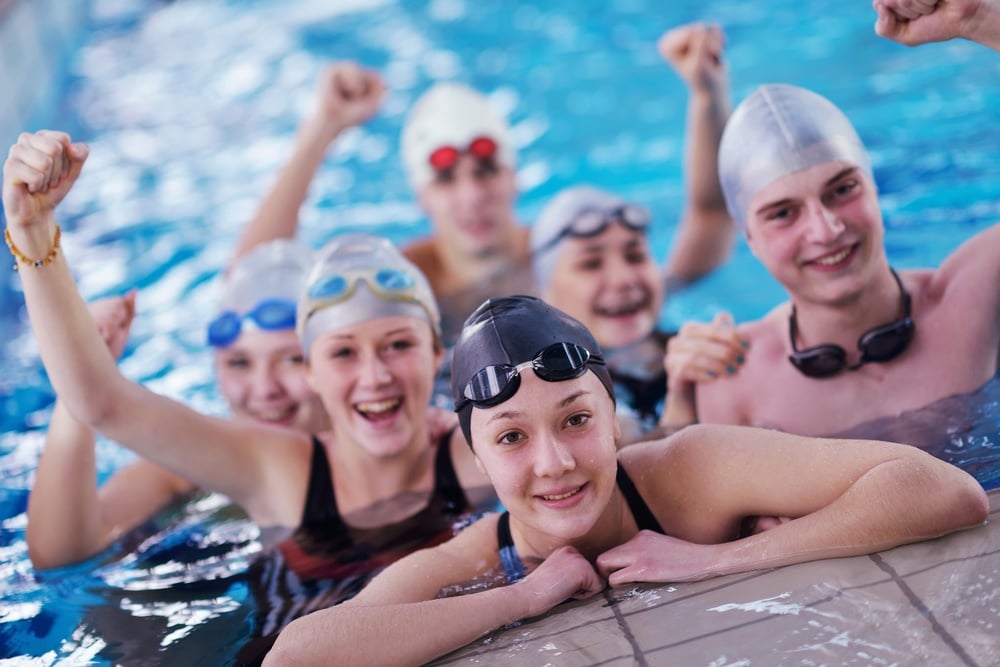
Luke Harris, a student at the SafeSplash Swim School in Bellevue, WA, tells his story about learning to swim at the age of fourteen years old. Being...
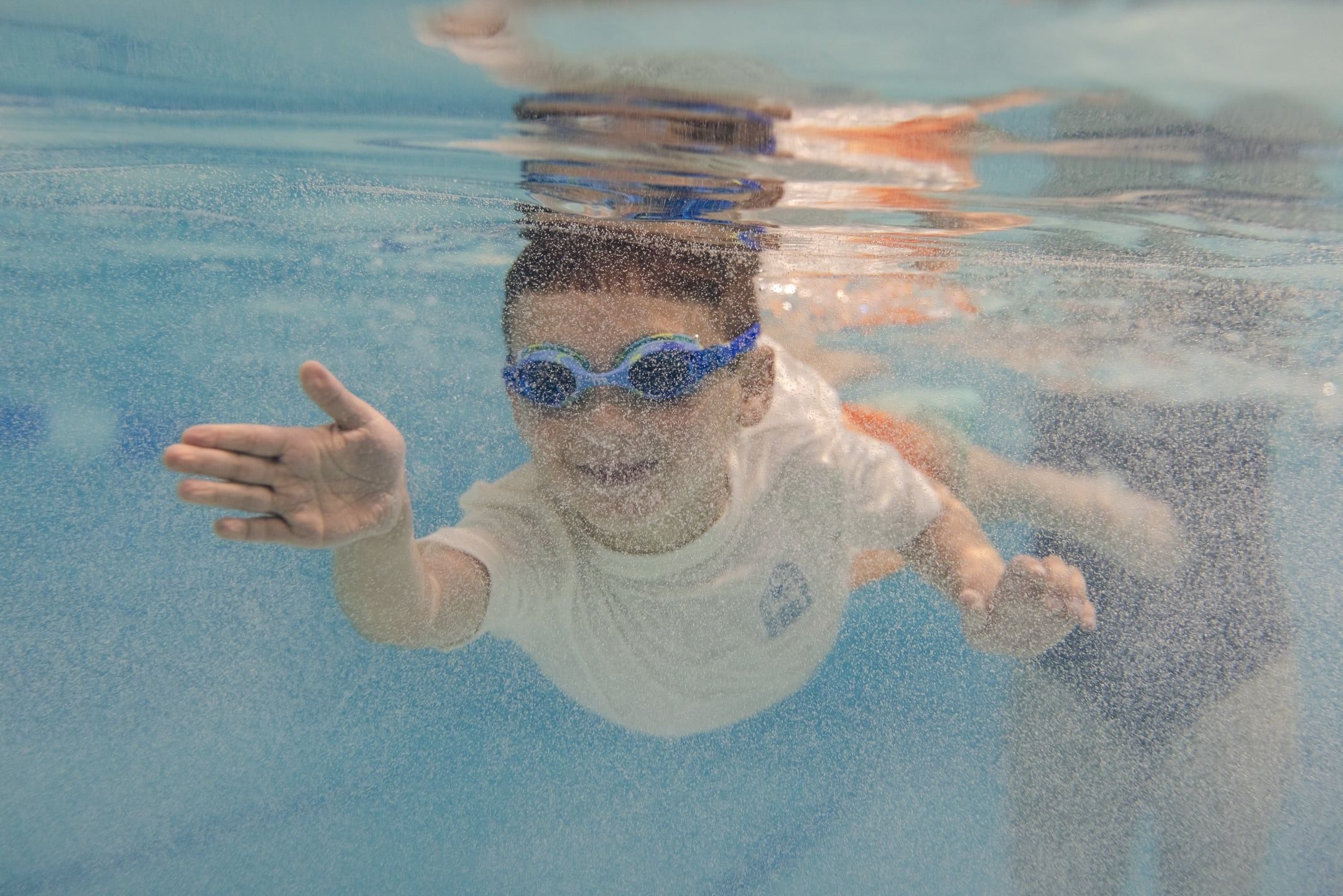
A child's first swim lesson can bring plenty of questions for parents. You have signed up and found the swimsuit, but you may still be wondering what...
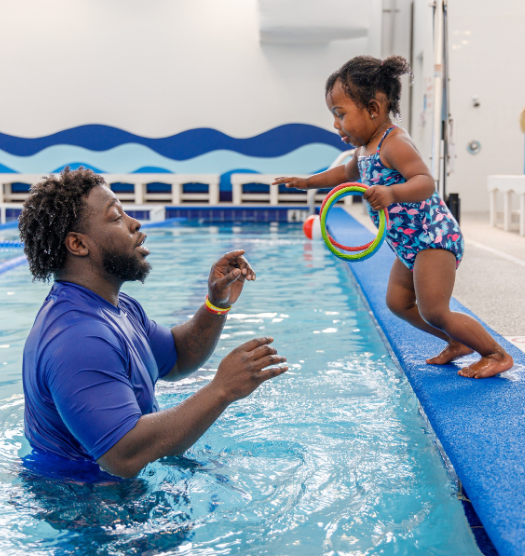
If you’re thinking about swim lessons for your child, you’re probably asking: How long does it take to learn to swim safely?The short answer: it...

Visit our Water Safety Blog for expert advice, family tips, and more!