
What Is a Swim Clinic? Clinics vs. Lessons | SafeSplash
Families comparing swim programs may encounter several short-term and specialized options, including stroke clinics, swim camps, and intensive lesson...
8 min read
SafeSplash Swim School : November 25, 2026

When families compare swim schools, instructor preparation is one of the most important areas to understand. Knowing how to swim and knowing how to teach swimming are different skills, and instructor requirements can vary among employers, facilities, and programs.
A useful comparison looks beyond whether an instructor is simply described as “certified.” Families can ask what training the instructor completed, which organization issued any credentials, what the training covered, and how the school supports instructors after they begin teaching.
This guide explains the different types of preparation a swim instructor may receive, what several common credentials cover, and which questions families can ask before enrolling.
There is no single swim-instructor credential used by every swim school or employer in the United States.
Different organizations offer training in swim instruction, water safety, lifeguarding, emergency response, competitive coaching, and aquatic operations. These credentials cover different responsibilities and should not be treated as interchangeable. When evaluating an instructor or swim school, ask:
The most useful question is not simply, “Are the instructors certified?” It is, “What training and credentials are required, what do they cover, and how are those standards maintained?”
Instructor preparation may include several distinct areas:
Curriculum training: Learning the program’s skill progression, instructional standards, and advancement requirements.
Level-and program-specific training: Learning how to teach the particular ages, skills, and class formats assigned to the instructor. Teaching ParentTot, Beginner lessons, Advanced swimmers, or another specialized program may require different preparation.
Completing one type of training does not automatically demonstrate preparation in every area. An instructor should understand both the school’s overall teaching approach and the specific level or program they have been assigned to teach.
| Training area | Questions families can ask | Why the distinction matters |
|---|---|---|
| Emergency response | What emergency-response training or credentials are required for instructors and other staff members? How are responsibilities assigned during lessons? | Requirements and staff roles may differ by facility, but the school should be able to explain how emergencies are recognized and handled |
| Aquatic safety procedures | How do instructors learn the facility’s emergency-action plan, swimmer-accountability procedures, and rules for water entry, diving, and pool access? | Facility procedures determine how staff members work together during lessons and emergencies |
| Teaching methods | What training do instructors receive in explaining, demonstrating, and reinforcing swimming skills? | Swimming ability alone does not establish the ability to teach effectively |
| Age-appropriate instruction | How does training address swimmers of different ages, starting skills, comfort levels, and communication needs? | The same explanation or activity may not be appropriate for every swimmer |
| Curriculum training | How do instructors learn the school’s levels, skill requirements, and advancement criteria? | A shared framework can support consistency across instructors |
| Individualized support | How are instructors prepared to adjust instruction or request additional support when a swimmer needs a different approach? | Swimmers may respond differently to the same cue, class format, or activity |
| Ongoing observation and feedback | Are instructors observed or coached after initial training? How is feedback provided? | Instructor development can continue after initial preparation |
Instructor preparation may include a combination of school-specific training and external safety or emergency-response credentials. These forms of preparation serve different purposes and should not be treated as interchangeable.
School-specific instructor training prepares instructors to deliver a particular curriculum, teach assigned levels and programs, evaluate skills, and apply advancement standards. Families can ask what the training includes, how instructors demonstrate readiness, and whether the training is specific to the classes they teach.
Emergency-response credentials may cover skills such as CPR, AED use, first aid, lifeguarding, or aquatic rescue. The credentials required for individual instructors and other staff members may vary based on the facility and how safety responsibilities are assigned.
Lifeguarding and swim instruction are separate responsibilities. Not every swim instructor is necessarily a certified lifeguard, and a lifeguarding credential does not by itself prepare someone to teach a swim curriculum. Families should ask how the water is monitored and how teaching, supervision, and emergency-response responsibilities are handled during lessons.
Competitive coaching education focuses on team training, performance, and competitive environments. Instructors working with advanced or team-preparation swimmers may need different preparation from instructors teaching infants or foundational learn-to-swim levels.
The most useful question is not whether every instructor holds the same outside credential. It is whether the instructor has completed the training required for the specific level or program they are teaching and how the school confirms that they are ready to lead that class.
These questions can help families understand how a school prepares and supports its instructors. Not every program will use the same model, but the school should be able to explain its approach clearly.
How does an instructor demonstrate readiness to lead a class? Ask whether instructors observe experienced teachers, practice teaching, co-teach, or lead lessons under observation before teaching independently.
A guaranteed outcome without clearly stated requirements. Ask which swimmers qualify, which skills define the outcome, what attendance is required, how progress is evaluated, and what happens if the outcome is not reached.
SafeSplash’s S.A.F.E.R. Swimmer Promise, for example, applies to qualifying children ages 4 and older enrolled in Beginner 2 through Beginner 4 group lessons. Consistent weekly attendance and other eligibility requirements apply.
Any suggestion that lessons make a child water-safe or replace supervision. Swim lessons can help children build swimming, water-safety, and self-rescue skills, but no lesson, instructor, level, or credential eliminates drowning risk or replaces attentive adult supervision and other appropriate safeguards.
SafeSplash instructor training combines online learning, classroom instruction, trainer-guided activities, and supervised in-water experience.
Instructors begin with required asynchronous online courses covering the SafeSplash curriculum, teaching approach, skill progression, and advancement standards. They also participate in classroom and in-person training led by a trainer.
In-water preparation follows a progressive process:
Observe: The instructor watches experienced team members teach the relevant level or program.
Co-teach: The instructor begins working with swimmers alongside an experienced instructor or trainer.
Lead while observed: The instructor leads lessons while a trainer or experienced team member observes and provides feedback.
Instructors complete this preparation for the specific levels and programs they teach. For example, an instructor assigned to ParentTot receives preparation for working with infants, toddlers, and participating caregivers. An instructor teaching Advanced swimmers completes training specific to the skills, techniques, and advancement standards used at that level.
New instructors are observed multiple times during their first several weeks of teaching. Observation, feedback, and coaching continue after the initial training period to support consistent instruction and ongoing development.
SafeSplash lessons follow a shared, skill-based curriculum and progression framework. Placement considers the swimmer’s age, current skills, and comfort in the water. Advancement is based on demonstrating the requirements for the next level rather than completing a predetermined number of lessons.
Instructors use curriculum-based skill tracking, and swimmers earn level ribbons as they progress. The shared framework gives instructors a common reference point for understanding which skills a swimmer is developing, what standard is required, and what remains before advancement.
Emergency-response credentials and facility staffing models may vary based on location, facility policies, and applicable requirements. Contact the local SafeSplash team if you have questions about the safety procedures or staffing model used at a particular school.
A well-trained instructor matters. They are not the only thing that matters.
The American Academy of Pediatrics recommends combining swim lessons with protections such as four-sided pool fencing, properly fitted life jackets when appropriate, and adults who know CPR. Swim lessons help children build water safety and swimming skills, but no lesson makes a child water-safe.
Do swim instructors need to be certified?
There is no single swim-instructor credential used by every swim school or employer in the United States. Requirements may differ by employer, facility, role, and applicable state or local rules.
Ask what training instructors complete before teaching independently, which external credentials are required, and how the school verifies that those credentials remain current.
What should parents ask about instructor training?
Ask what instructors must complete before teaching independently, whether the training includes online, classroom, and in-water components, and how instructors demonstrate readiness to lead a class.
Parents should also ask whether instructors are trained specifically for the levels and programs they teach, how they are observed after beginning to teach, and how safety and emergency-response responsibilities are assigned during lessons.
Is every swim instructor also a certified lifeguard?
Not necessarily. Lifeguarding and swim instruction are different responsibilities and require different preparation. Some instructors may also hold lifeguarding or other emergency-response credentials, but that is not universal across all programs or facilities.
Ask the school how the water is monitored during lessons, which team members are responsible for emergency response, and what training or credentials are required for each role.
How can I evaluate a swim school’s instructor standards?
Ask what training instructors complete before teaching independently, which credentials are required, how instructors learn the curriculum, whether they receive ongoing observation or feedback, and how the school communicates swimmer progress when instructors change.
Families should also ask about class size, screening requirements, and how the water is monitored during lessons.
What student-to-instructor ratio should a children’s swim class have?
Ratios differ by age, level, lesson format, program, and facility. Ask for the ratio that applies to your child’s specific class rather than relying on one schoolwide number.
Also ask how the class is organized, how swimmers are positioned while waiting for a turn, and which other staff members are present on deck.
Will my child have the same swim instructor every week?
Instructor continuity depends on staffing and scheduling. Ask how the school communicates information about a swimmer’s current skills, goals, and needs when another instructor teaches the class.
At SafeSplash, instructors follow a shared curriculum and use curriculum-based skill tracking, providing a common reference point for the swimmer’s current level and advancement requirements.
How are SafeSplash instructors trained?
SafeSplash instructor training includes required asynchronous online courses, classroom instruction, in-person trainer-guided activities, and supervised in-water teaching.
Instructors observe lessons, co-teach alongside experienced team members, and then lead lessons while being observed and receiving feedback. They complete training for the specific levels and programs they are assigned to teach and are observed multiple times during their first several weeks. Observation and coaching continue on an ongoing basis.
What should I ask when touring a swim school?
Ask what training instructors complete before teaching independently, which safety credentials are required, how instructors learn the curriculum, how the water is monitored during lessons, and what class ratio applies to your swimmer’s age and level.
You can also ask about advancement requirements, instructor supervision, background checks, instructor changes, and how the team responds when a child is hesitant or distressed.
Contact your local SafeSplash team to ask:
You can also discuss your swimmer’s age, current skills, comfort, goals, and recommended starting level.
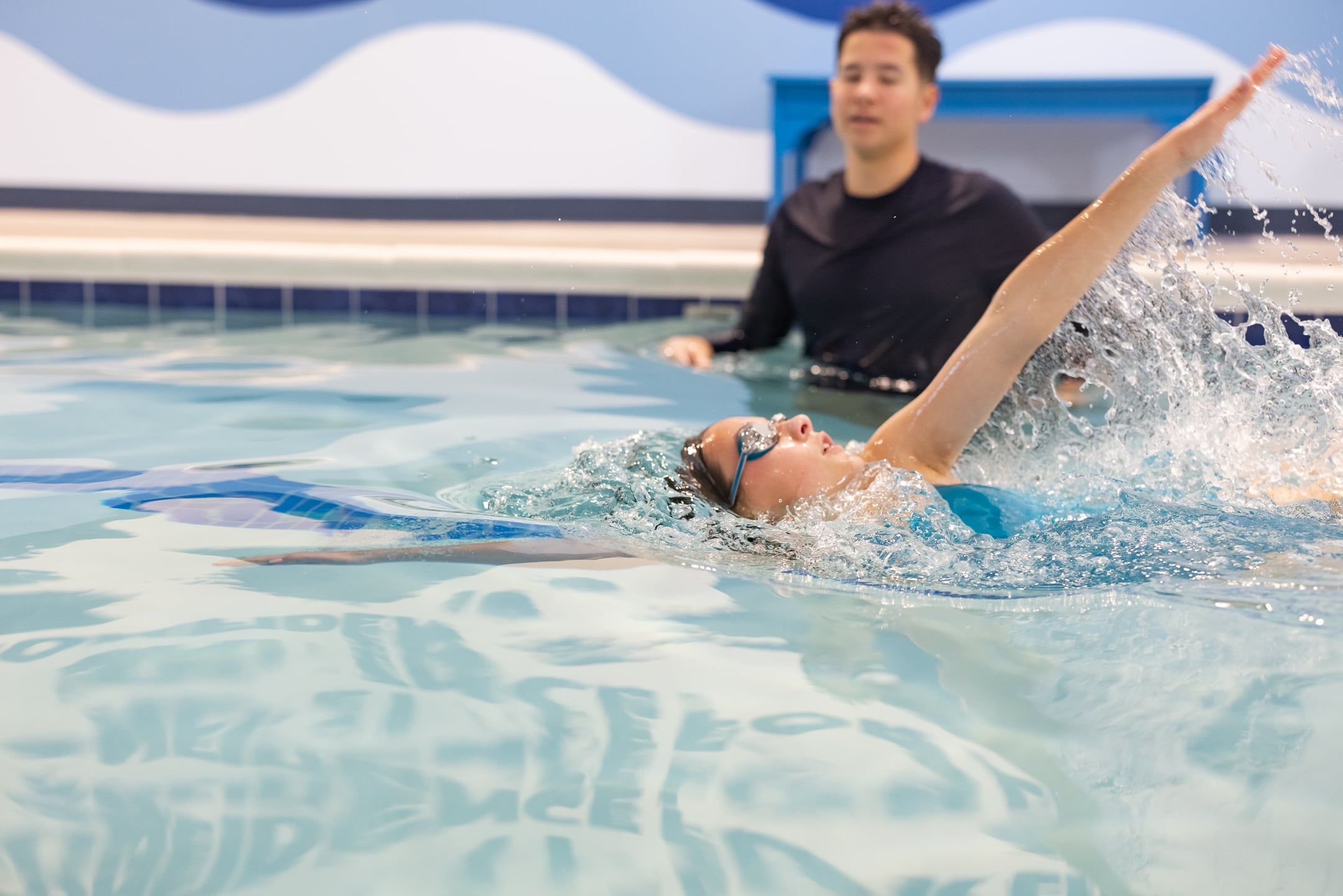
Families comparing swim programs may encounter several short-term and specialized options, including stroke clinics, swim camps, and intensive lesson...
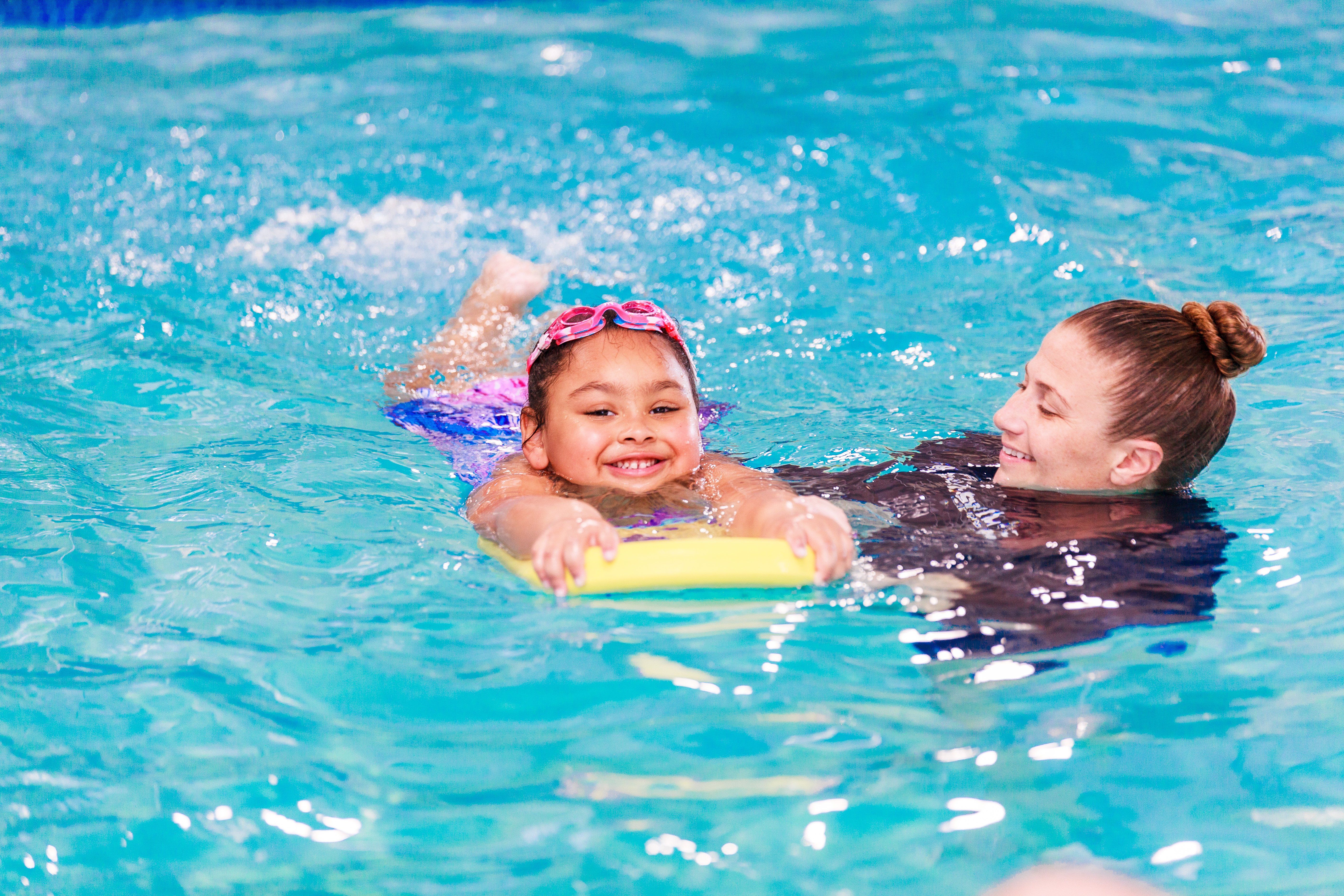
For a child who already has plenty of toys, swim lessons can be a meaningful alternative: a gift that helps build confidence, swimming ability, and...
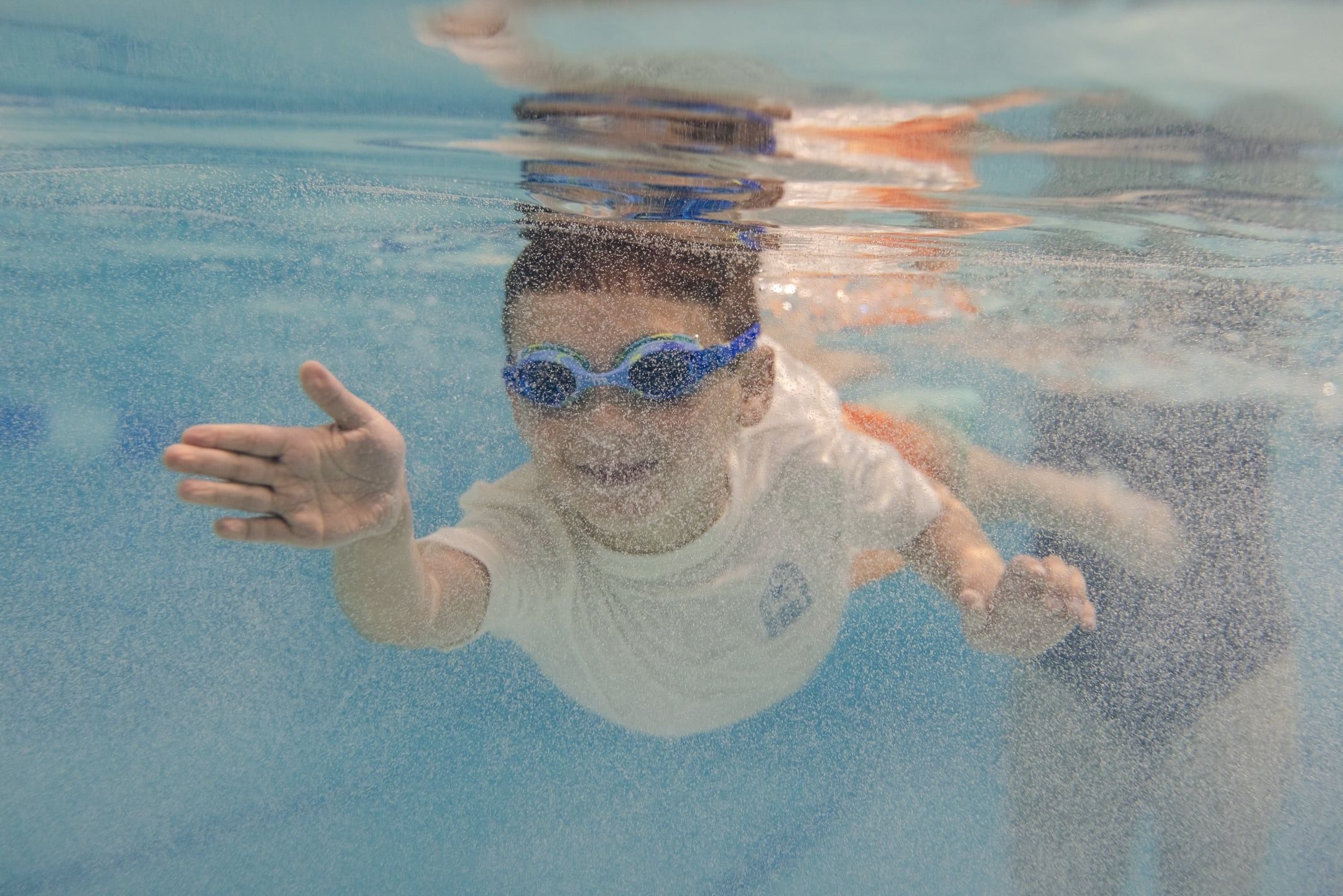
A child's first swim lesson can bring plenty of questions for parents. You have signed up and found the swimsuit, but you may still be wondering what...

Visit our Water Safety Blog for expert advice, family tips, and more!