5 min read
Adult Swim Lessons: What to Expect When You Learn to Swim as an Adult
SafeSplash Swim School : August 21, 2026
Plenty of adults never learned to swim. Some grew up without access to a pool. Some had one difficult experience in deep water and never went back. Others learned enough to get by but still avoid water where they cannot stand.
If that sounds familiar, you are far from alone. According to the Centers for Disease Control and Prevention, nearly 40 million U.S. adults, or 15.4%, report that they do not know how to swim. More than half of adults report never having taken a swimming lesson.
Your starting point is nothing to be embarrassed about, and it does not have to be permanent. Adults of many ages and experience levels learn to swim. Here is what adult swim lessons cover, what your first few sessions may look like, and how to find an appropriate class.
Adult class availability, format, schedule, and pool depth differ by location, so your local SafeSplash team is the place to confirm what is offered near you.
What adult swim lessons cover
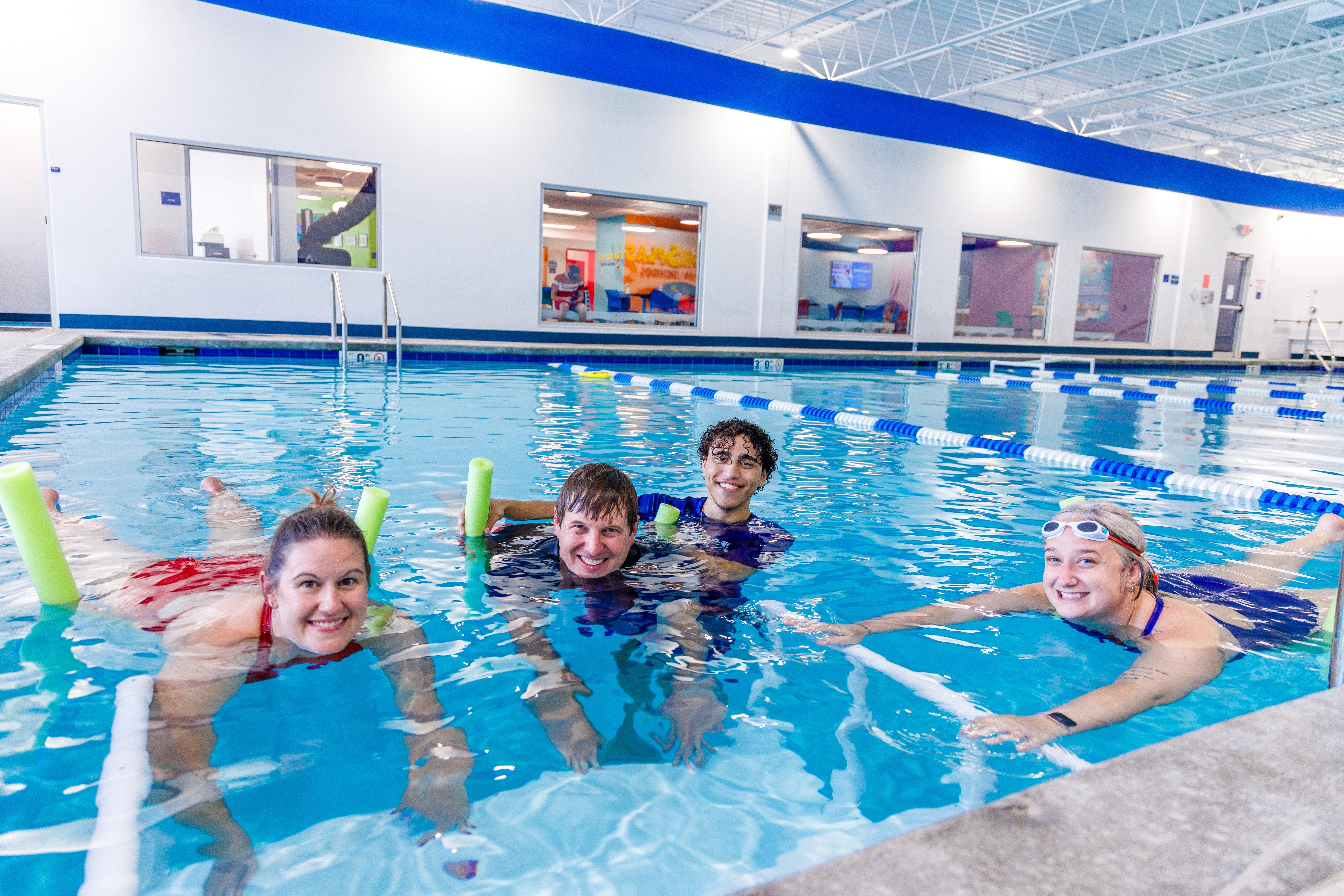
Adult swim lessons build foundational water safety and swimming skills through instruction adapted to an adult's starting point, comfort level, and goals. SafeSplash offers adult lessons at participating locations using the same progressive, skill-based approach that guides our broader curriculum.
Most adult beginners work through some version of this progression:
| Focus | What it may involve in the water |
|---|---|
| Comfort and breath control | Becoming comfortable with water on the face and practicing controlled exhalation underwater |
| Buoyancy and body position | Learning how breathing and body position affect buoyancy and practicing a supported horizontal position |
| Front and back floating | Practicing supported and increasingly independent front and back floats, along with returning to a standing position |
| Safer entries and exits | Entering and exiting the water in a controlled way and orienting to the wall |
| Propulsion | Developing kick and arm mechanics, then coordinating the two |
| Stroke development | Freestyle with rhythmic breathing, backstroke, and additional strokes according to the swimmer's goals |
Adult learners may benefit from detailed verbal explanations, an understanding of why a skill works, and opportunities to adjust their body position based on instructor feedback. Comfort may develop at a different pace for every swimmer.
If you are nervous about the water
Nervousness around water is common among adult beginners, and it is not something you need to resolve before signing up. A good class starts wherever you actually are.
What tends to help:
- Say it out loud at registration. Telling your local team what specifically worries you, such as deep water, putting your face in, or floating on your back, gives them useful context when helping you choose a starting point.
- Ask about pool depth. Many early skills can be introduced in water where the swimmer can stand. Ask where beginner lessons are taught and how deep the pool is.
- Ask what the class format is. Adult lessons may be offered in group, private, or semi-private formats. Some adults prefer the individual instructor attention of a private lesson focused on their own skills and goals. Others find real reassurance in watching peers at a similar level work on the same thing. Neither format is automatically better for a nervous swimmer, and neither guarantees faster progress.
- Expect uneven weeks. Comfort, capability, and confidence develop together and reinforce one another, and they rarely move in a straight line. One difficult session does not erase earlier progress or mean that learning to swim is beyond your reach.
You do not need to arrive relaxed. You do not need to hide being nervous. Hesitation and limited water experience are reasons to look for a patient, adult-appropriate program, not signs that you cannot begin.
What a first adult lesson may look like
A first lesson may include a conversation about your goals and prior experiences, an assessment of your current comfort and skills, and introductory activities appropriate to your starting point. For a true beginner, that could be as simple as entering shallow water, practicing controlled breathing, or becoming comfortable putting the face near the water.
You will generally need a swimsuit and towel. Ask your location whether goggles, a swim cap, or any additional items are recommended for your class.
SafeSplash uses warm-water pools to help swimmers stay comfortable and focused.
If you would like to see a class before enrolling, ask whether you can observe. Class observation arrangements differ by facility.
Why adults learn
Adults come to lessons for reasons that are usually more specific than "I should know how to swim":
- Feeling more comfortable participating in vacations, cruises, boating, or other activities around water
- Wanting greater confidence participating in water activities with a child or family member
- A triathlon or a fitness goal that requires a swim leg
- Exploring swimming as a low-impact form of exercise
- Wanting to be safer in and around water, on their own terms
You do not need a dramatic reason to begin. Wanting to feel more comfortable and capable in the water is enough.
Water safety does not stop at lessons
Swim lessons build water competency and can help adults become safer in and around the water, but they do not eliminate risk. Even strong swimmers can face conditions that exceed their skills.
Whatever your skill level:
- Wear a properly fitted, U.S. Coast Guard-approved life jacket when boating and whenever your skill level, activity, or water conditions call for one. Inexperienced swimmers should not rely on inflatable toys or other pool floats as substitutes.
- Never swim alone, regardless of your skill level. Choose a lifeguarded area whenever possible.
- Learn CPR and refresh your training regularly.
- Remember that open water is different from a pool. Currents, waves, cold water, sudden drop-offs, and limited visibility can create additional risks, even for capable swimmers.
- Avoid alcohol or other substances that impair judgment before and during swimming or boating.
Water safety matters year-round, whether you are visiting a pool, a vacation rental, a water park, a lake, a river, or a beach.
Frequently asked questions
Can adults learn to swim?
Yes. Adults of many ages and starting levels learn to swim, including people with little or no prior water experience. Instruction can begin with basic comfort and foundational skills and progress according to the swimmer's abilities and goals.
How many adults do not know how to swim?
According to the Centers for Disease Control and Prevention, an estimated 40 million U.S. adults, or 15.4% of survey respondents, reported not knowing how to swim. More than half of adults, 54.7%, reported never having taken a swimming lesson.
Does SafeSplash offer adult swim lessons?
SafeSplash offers adult swim lessons at participating locations through a progressive, skill-based curriculum adapted to each swimmer's starting point and goals. Contact your local SafeSplash team to learn which adult class formats and schedules are currently offered.
How long does it take an adult to learn to swim?
The timeline looks different for every person and depends on starting point, comfort in the water, how consistently you attend, and what you want to be able to do. An adult learning to float and move safely across a pool is working toward something different from an adult training for a triathlon swim.
Are adult swim lessons group or private?
Adult lessons may be offered in group, private, or semi-private formats. Group lessons let you learn by watching peers demonstrate skills, listening to instructor feedback, and practicing alongside people at a similar level. Private lessons offer individual instructor attention focused on your own skills and goals. Which fits better depends on you and on what your location offers.
I am scared of the water. Should I still sign up?
Nervousness is common among adult beginners and does not need to be resolved beforehand. Share what specifically worries you with your local team and your instructor so they have the full picture. Many early skills can be introduced in water where the swimmer can stand. Ask where beginner lessons are taught and how deep the pool is.
What should I bring to my first adult swim lesson?
Bring a swimsuit and towel, and ask whether goggles, a swim cap, or any additional items are recommended.
Do I need to be in shape to start swim lessons?
You do not need to be an experienced athlete to begin. Adult beginner lessons focus on comfort and foundational skills, with instruction adapted to the swimmer's starting point. If you have a medical condition or concerns about physical activity, talk with your healthcare provider before beginning.
Find adult swim lessons near you
Talk with your local SafeSplash team about your current skills, comfort level, goals, and prior experience in the water. They can help identify an appropriate starting level and available class format.